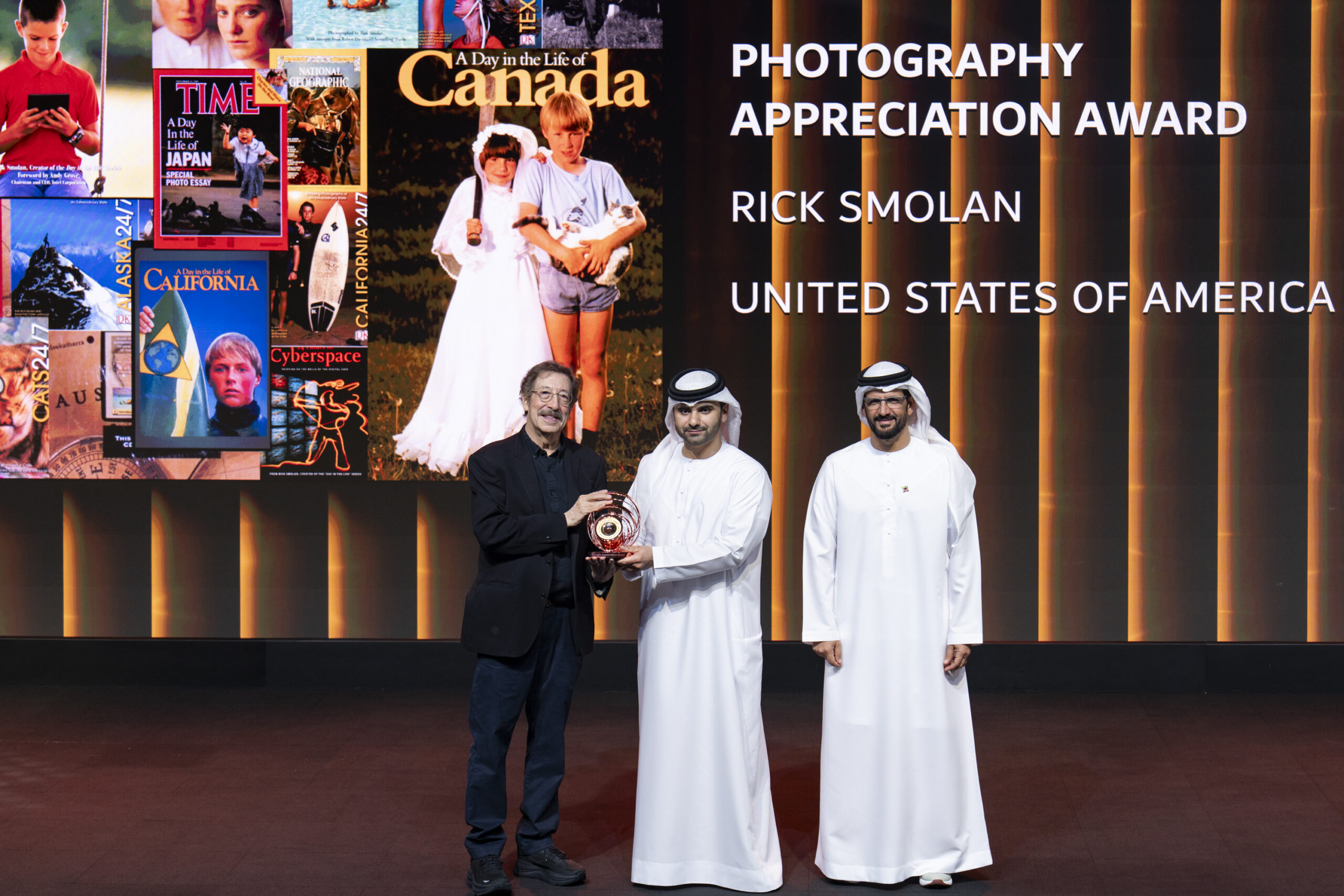
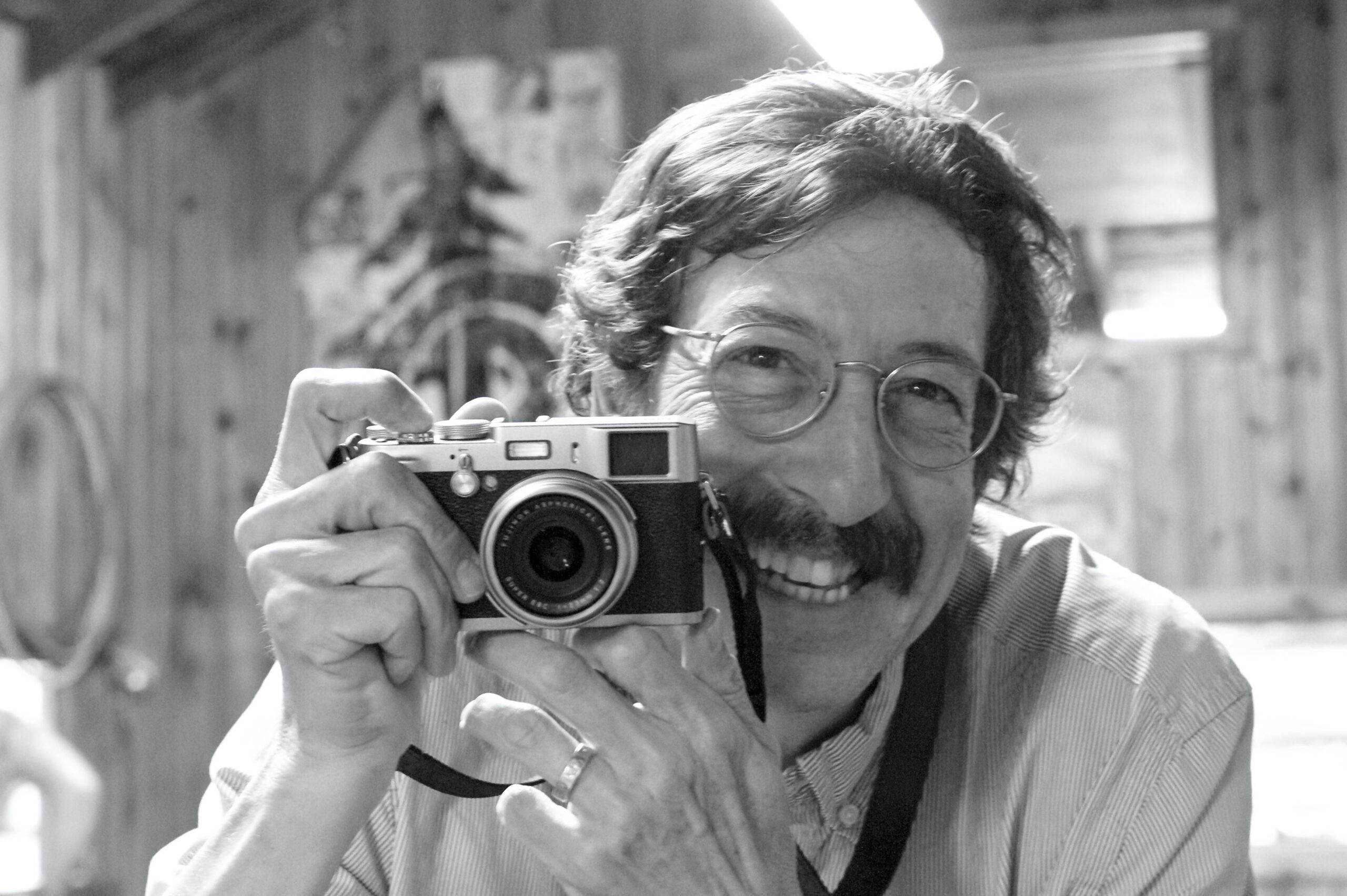
Few photographers have shaped not just how we see the world, but how the world collaborates to see itself. Rick Smolan belongs to that rare breed of visual storytellers who refused to accept the limits of the medium as it was handed to them. From redefining photojournalism to creating one of the most successful collaborative publishing models in history, Smolan’s career has been driven by a restless belief—and what is that belief—that stories are always bigger than a single frame, a single photographer, or a single point of view.
In this conversation with Bhavya Desai, Smolan reflects on photography’s shifting ground—from the analogue era to AI, from editors with fixed ideas to photographers demanding agency and from solitary image-making to global visual orchestration. What emerges is not nostalgia, but clarity: a reminder that technology changes, markets collapse and reappear, but the core responsibility of a photographer—to observe, to persist, and to tell meaningful stories—remains unchanged. Excerpts:
To call Smolan anything less than a legend would be unreal. He has always seen photographs and words not as rivals, but as partners. Early in his career, he admits, he felt the same insecurity many photographers do—the desire for images to dominate the page, to speak louder than text. But experience, and eventually publishing, taught him otherwise. Some things, he realised, photographs do better—for all other things—there are words. And when they work together, they amplify each other.
Though he still thinks of himself first and foremost as a photographer, over time he learned how to write, how to edit writers, how to guide narratives—a skillset he developed long before artificial intelligence entered creative conversations and largely without its help.
That instinct for synthesis would later define some of his most ambitious projects. Perhaps one of my favourites of his work is—The idea for The Human Face of Big Data. The idea of creating a face for an inanimate object, something you can only see and not feel seems fascinating to me—and that’s where my question to him also stems from.
And as he asserts that this idea emerged not from technology, but from conversation. For nearly 25 years, Smolan attended TED, and during one of those visits he found himself speaking to Marissa Mayer, then CEO of Yahoo!. When she asked what he planned to do next, he admitted he wasn’t sure. Her response was simple: look at big data.
At first, Smolan didn’t even know what the term meant. Mayer described a world where the devices we carry have effectively given the planet a nervous system—where each person has become a sensor, a node in a vast, invisible network collecting information about movement, habits, relationships and choices.
That metaphor unlocked everything. Big data, Smolan realised, was not about technology itself, but about what technology reveals—like a new kind of microscope, exposing patterns that had always existed but were previously invisible. Photographing big data was, of course, nearly impossible in literal terms. But photographing its impact on civilisation, on daily life, on human behaviour—that was the real story. The project resonated globally, was distributed to 10,000 influential people in a single day, landed on the cover of Fortune, and in hindsight proved prophetic. Big data, Smolan notes, was the necessary bridge to AI—microprocessors led to computers, computers to networks, networks to data, and data to artificial intelligence.
When he looks back across decades of work, the impact that gives him the most pride isn’t a single image or book, but the community his projects unintentionally created. The Day in the Life series didn’t just document moments—it brought together a global family of photographers who might otherwise have spent their careers competing. In doing so, the projects elevated photojournalism, helped create the mass market for coffee-table photography books, and delivered a particularly sweet irony: concepts rejected by 35 publishers went on to become the best-selling photography series in publishing history.
Smolan’s perspective on photography before and after 2000 is both candid and bittersweet. In the analogue era, there were fewer photographers and becoming good was harder. That difficulty created standards—and respect. Today, photography has become more commodified, even disposable. Images are made endlessly, consumed quickly, and forgotten just as fast. If you don’t look at a photo on your phone within a day or two, he notes, you probably never will. There was a time when family histories were carefully curated in albums and scrapbooks, often by mothers who acted as informal archivists of memory. That physical relationship with photographs has largely disappeared.
Asked whether social media would have amplified his reach or diluted his impact, Smolan sees both sides. Digital tools have democratised participation, and spontaneity can yield images no editor would ever plan for. But a camera in your pocket doesn’t make you a photographer any more than a pencil makes you a writer. Craft still matters. Vision still matters.
That insistence on agency—on letting photographers tell the story as it actually exists—was what pushed Smolan away from traditional photojournalism toward large-scale, conceptual collaborations. Early success with Time, National Geographic and Fortune came with a frustration familiar to many photographers: editors often sent him out with preconceived narratives. On the ground, reality rarely matched those assumptions. Yet back in the office, editors would search the images for validation rather than truth. Smolan wanted a project without that filter.

Day in the Life was born from that frustration—and from rejection. Publishers dismissed the idea as impractical, expensive and commercially unviable. They doubted anyone would care about an entire country in a single day. They doubted photographers would participate without pay. Some even suggested faking it with stock images. Unable to find support, Smolan took an unconventional route, approaching the Prime Minister of Australia, who helped broker sponsorships instead. The result was a self-published book with unprecedented marketing muscle and creative control. Free from publisher constraints, Smolan could prioritise quality over margins—six-colour printing, better paper, stronger covers. Rejection, he realised, was the greatest gift. It forced him to become a publisher.
The books themselves were edited collectively—a safeguard against ego. Multiple editors, diverse sensibilities, votes, filters. The final selection was less about individual brilliance and more about how images spoke to each other. The sequencing mattered. Sometimes two photographs side by side told a stronger story than either could alone.
On the craft itself, Smolan’s advice is deceptively simple: get close, and make technology invisible. The camera should feel like an extension of your arm, not something you’re thinking about. In the film days, every roll-imposed restraint—36 frames, constant interruptions, missed moments. Today’s abundance removes that limitation, but it also removes discipline.
But was photography once more respected as a true art? Smolan believes golden ages are only recognised in hindsight. No one expects them to end. If Life and Time could disappear or shrink beyond recognition, so could entire ecosystems of photography. The mass market for coffee-table books—something his projects helped create—has largely collapsed under the weight of digital distraction. Physical photographs, once treasured objects, now live unseen on hard drives and phones. What worries him most isn’t nostalgia, but memory itself: a collective history drowning in images no one revisits.
For young photographers, his advice is pragmatic and unsentimental. You must be a storyteller across mediums—stills, video, sound. You must work faster, travel lighter, and accept shorter assignments. Budgets are smaller, patience thinner. That often means weaker pictures, because relationships take time. Still, persistence matters. Not loud persistence, not passive waiting—but quiet determination. In the end, Smolan says, most of a photographer’s job isn’t pressing the shutter. It’s charming your way past the palace guard. The photograph comes later.
And perhaps that, more than anything, explains his legacy. Rick Smolan didn’t just document the world. He learned how to enter it—patiently, persuasively and with enough curiosity to bring others along.