Tag Archives: Epic Landscapes

Sentience: A Manifesto for Modern Landscape Photography

Credit: Spencer Cox

The world of landscape photography is currently at a crossroads. For decades, the recipe for a “great” photo has been fairly rigid: find a famous mountain, arrive at sunrise, set your tripod to a specific height, use a wide-angle lens, and wait for the “hero light”. But in 2026, we are witnessing a quiet revolution. As artificial intelligence becomes capable of generating “perfect” sunsets with a single tap, the value of that technical perfection is plummeting.

If a machine can create a flawless vista of the Himalayas, why do we still trek for days to see them? The answer doesn’t lie in the pixels; it lies in the presence.

The “Sentient Landscape” is a philosophy that moves away from the hunt for the perfect shot and toward a deeper, more visceral relationship with the world around us. It’s about slowing down, embracing the “messy” reality of nature, and using your camera not just as a recording device, but as a sensory bridge. Here is how we redefine the craft for an era that values soul over sharpness.

Finding Poetry in the Small Stuff: The Intimate Landscape

We have been conditioned to think that “landscape” means “everything”. We reach for our widest lenses to cram as much of the horizon into the frame as possible. But there is a profound, quiet power in doing the exact opposite.

Credit: Spencer Cox

The Intimate Landscape is the art of extraction. It’s about using a telephoto lens—the kind you’d usually use for birds or sports—to zoom into the patterns of the earth. When you remove the sky and the horizon, you remove the context of scale. A ripple in a sand dune can look like a vast desert; the bark of an ancient tree can look like a topographical map of a canyon.

By looking for the “landscape within the landscape”, you stop being a tourist and start being an observer. You begin to see rhythms, textures, and shadows that the “hero shot” hunter misses. It’s the difference between hearing a symphony and listening to the vibrato of a single violin string.

Painting with the Cosmos: Astro-Landscape Impressionism

Astrophotography is often the most technical, rigid genre of them all. It’s usually about noise reduction, star tracking, and pinpoint sharpness. But the stars aren’t just cold dots of light; they are ancient, pulsing energy.

Source: Reddit.com/u/ErnestasPo12

Astro-Landscape Impressionism – specifically through a technique called Intentional Camera Movement (ICM) challenges the “sharpness” rule. Imagine standing under a brilliant night sky, perhaps with Jupiter or the Milky Way burning bright above you. Instead of locking your camera down on a heavy tripod, you hold it. As the shutter stays open for a few seconds, you move the camera with a slow, deliberate rhythm.

The result is a dreamscape. The stars turn into streaks of light, blending with the silhouettes of trees or mountains. It looks less like a photograph and more like a painting by Van Gogh or Monet. You aren’t capturing the geometry of the night; you are capturing the feeling of standing under the infinite. It’s a way of saying, “This is how the night felt to me,” rather than “This is what the night looked like.”

The Atmospheric Protagonist: When Weather Becomes the Hero

How many times have we checked the weather forecast, seen “cloudy and rainy”, and decided to stay home? In the conventional world, rain is a nuisance. In the Sentient world, the storm is the story.

Credit: Mads Peter Iversen

When we wait for the “perfect” light, we are essentially asking nature to perform for us. But the most honest moments in nature are often the most difficult. A mountain peak that is half-hidden by a heavy monsoon mist is infinitely more mysterious than one under a clear blue sky. A forest floor during a grey, drizzly afternoon has a depth of colour—a “neon” green to the moss and a deep obsidian to the wet rocks—that a bright sun would simply wash out.

“Weather as the Hero” means leaning into the low contrast. It’s about realising that fog isn’t hiding the landscape; it is the landscape. It adds a sense of “Soft Fascination”, a psychological state where our brains can rest and recover by looking at the gentle, repeating patterns of nature without the harsh glare of a “hero” sun.

With all that being said, we’d advise not going out in bad weather, such that it can cause damage to your equipment or harm to you, just to try and get a “good” shot.

The Intentional Pause: The Psychology of Not Releasing the Shutter

Source: Reddit.com/u/life_is_a_conspiracy

The biggest barrier to great photography in 2026 isn’t bad gear; it’s the digital trigger-finger. We take thousands of photos, hoping that one of them will be “the one”. This “spray and pray” method actually disconnects us from the very place we are trying to capture.

The most avant-garde advice for a modern photographer is simple: Stop shooting, or to be more precise, stop shooting as much.

Practice the Five-Frame Limit“. Go to a beautiful location and spend three hours there, but allow yourself only five clicks of the shutter. What happens to your brain when you do this is fascinating. You stop looking at your screen and start looking at the land. You notice the way the wind moves through the grass. You feel the change in temperature as a cloud passes. You hear the distant call of a bird.

When you finally decide to press the button, that frame carries the weight of those three hours. It isn’t just a picture; it’s a memory that has been carefully selected and refined by your own presence. This is what it means to “shoot with intent”.

PS: Film photography is totally not dead, try taking it up if you’re struggling with the issue of the digital trigger-finger, and have got some coin to spare.

Vying For An Authentic Future

As we move further into a world of digital perfection, Sentient Landscapes offer a path back to what makes us human. It reminds us that photography isn’t about the gear we use, it always has been about the way we choose to see.

By embracing the intimate, the impressionistic, and the atmospheric, and by slowing our pace to match the rhythm of the earth, we create images that are uniquely ours. They might not be the “cleanest” or the “sharpest” shots on social media, but they will be the most honest.

In 2026, the most radical thing you can do as a photographer is to stop trying to be a machine and start trying to be a soul in the wilderness.

Slow Mind, Soulful Stills – Mahendra Bakle

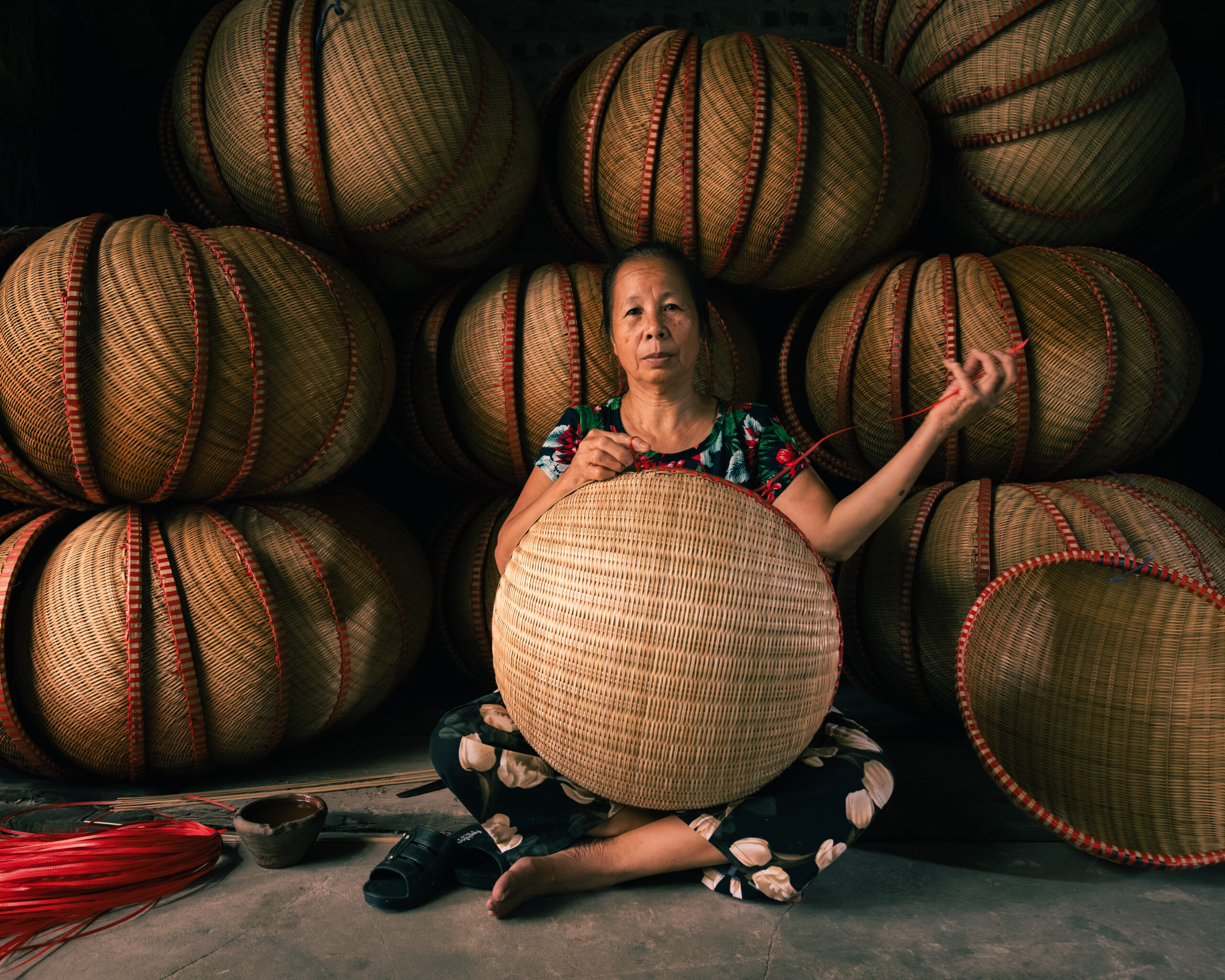
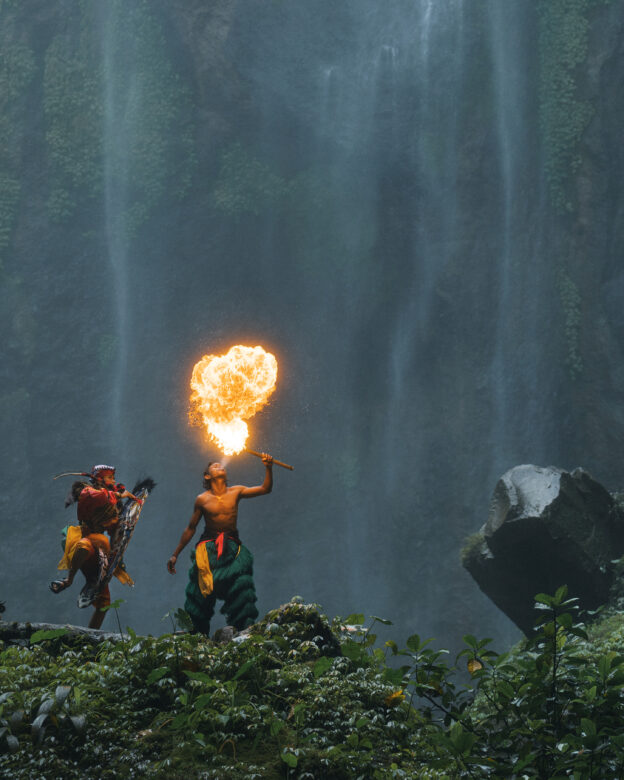
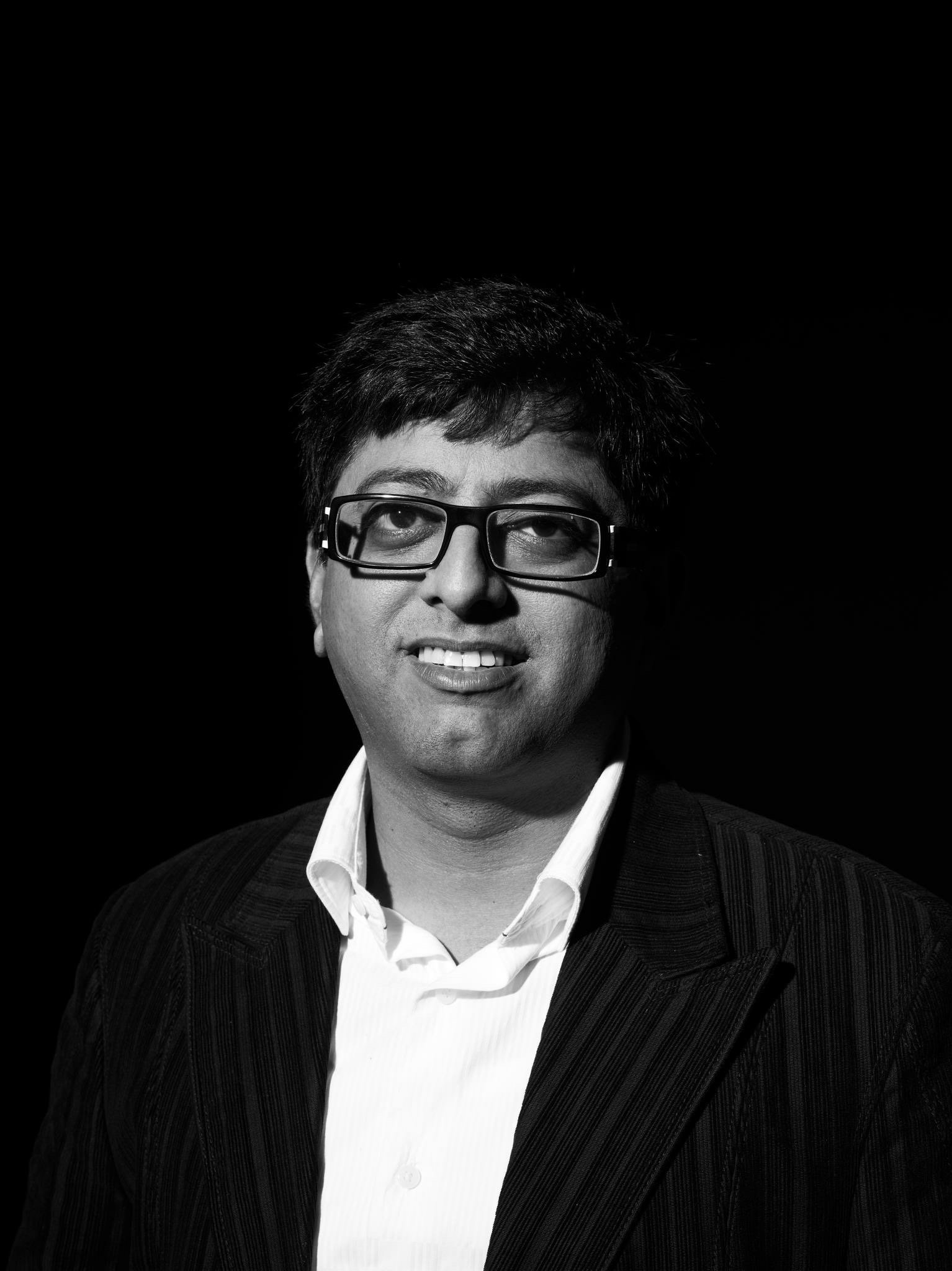
Mahendra Bakle is a travel and documentary photographer from India whose work captures cultural stories and human connection across Asia. His images—often set in remote villages—blend natural light, emotion, and authenticity to reflect the soul of a place. Previously featured on our On The Horizon section, he’s now an internationally acclaimed artist featured in publications like National Geographic and more. Asian Photography caught up with him, talking about the evolution of his work, travel lessons, underrated skills and more. Excerpts:

How would you introduce yourself to someone who’s never heard of your work? 

I’m a travel and documentary photographer from India. My work focusses on capturing  cultural stories, traditions, and people in their natural environments, typically in remote and  lesser-known regions across Asia. I’m especially drawn to moments where light, texture, and  human emotion intersect. I spend time getting to know the people I photograph, typically sharing conversations, tea, or even laughter before lifting the camera. This approach helps me create authentic, respectful portrayals of the soul of a place and its people. 

But, at the core, I remain a curious traveller with a deep love for culture, light, and storytelling through the lens. 

How have you and your work evolved over the years? 

Over the years, both my photography and my personal perspective have evolved in profound  ways. When I first started, I was focussed mainly on capturing beautiful moments — interesting  faces, scenic places, or striking compositions. But as I travelled more, especially through  remote villages and culturally rich regions across Asia, I realised that the real power of  photography lies in storytelling and human connection. 

I’ve grown from being a silent observer to an engaged documentarian. Now, I spend more  time understanding the people I photograph—their lives, traditions, and daily rituals. That  connection reflects in my work, which has become more intimate, emotionally layered, and  culturally grounded. 

I’ve evolved technically as well. My editing style has become more refined—natural tones,  subtle light enhancements, and a focus on preserving authenticity. Tools like Lightroom and  Photoshop have helped, but the biggest change was internal: I’ve learned to slow down, wait for the right moment, and let the story reveal itself rather than chase it. 

Each image today feels less like a photo and more like a conversation—a small but powerful  bridge between cultures. That’s the evolution I’m most proud of. 

What’s the earliest lesson travel has taught you, and is it still relevant today? 

One of the earliest and most important lessons travel taught me is humility—the  understanding that no matter how much you know, there’s always more to learn from the  world and its people. When I first began travelling for photography, I would enter a place with a camera and curiosity. But very quickly, I realised that true stories don’t come to you unless you slow down, listen, and approach every place and person with deep respect. 

While sitting with a tribal elder in Nagaland or sharing coffee with a monk in Myanmar, I learned that being present and open-hearted reveals far more than any guidebook ever could. That lesson remains just as relevant today—if not more—especially in a world where things move fast and surface-level interactions are common. For me, meaningful photography still begins with humility, patience, and respect. These are timeless values, both in life and in art. 

Has Instagram changed your perspective about photography? 

Yes, Instagram has definitely influenced my perspective—both in positive and challenging  ways. In the beginning, it pushed me to be more consistent with my work, to develop a recognisable style, and to curate how I present stories. It helped me connect with photographers and cultures around the world, and brought my work to people I would have never reached otherwise. That visibility has opened doors to exhibitions, collaborations, and even meaningful conversations with strangers who resonated with an image. 

However, I’ve also had to be careful not to let the platform dictate my vision. With the  constant pressure to post, chase engagement, or follow trends, it’s easy to lose sight of why we begin in the first place. I’ve learned to use Instagram as a tool to share, not perform—to stay true to the slower, more intentional documentary style that defines my work, even if it doesn’t always follow the algorithm. 

My core values in photography — storytelling, authenticity, and connection—remain unchanged even with the challenge that Instagram has presented. 

With photography becoming more democratized now, what’s the most underrated skill  newcomers ought to focus on? 

In today’s world, almost anyone can take a beautiful picture—cameras are smarter, editing  tools are more accessible, and inspiration is everywhere. Amidst all this, I think the most  underrated skill is developing and staying true to your own unique visual style and voice. 

When I look back at my journey, what set my work apart wasn’t just technique—it was the  consistency in how I saw and told stories. For me, that meant focussing on natural light,  human connection, cultural authenticity, and subtle, respectful colour tones. It took time to  discover that voice, and even more discipline to protect it from trends and algorithms. 

Newcomers often try to replicate popular styles for quick attention, but I believe true growth  comes from shooting what you genuinely care about, again and again, until your work begins  to speak for you—even without a caption. 

So yes, learn the technicals, explore platforms, be inspired—but also spend time  understanding what moves you, and allow that to shape your photography. That’s what will  make your work stand out in the long run. 

How do you think one can stay curious after mastering the basics? 

I stayed curious by remembering why I started photography in the first place—not just to make technically perfect images. Even after mastering the basics, I still approach every assignment or journey with the mindset of a student. Curiosity grows when you step out of your comfort zone—whether it’s visiting a new place, learning from someone else’s process, or even trying to see the familiar with fresh eyes. Sometimes, I’ll go back to the same village or location, but with a different lens—emotionally and literally—and it leads to a completely new perspective. 

I also find inspiration in slowing down. When you stop chasing shots and start observing  more deeply, new layers begin to reveal themselves—light changes, human expressions shift,  stories unfold. That’s where curiosity thrives. 

So for me, the key is to keep exploring—not just the world, but also within myself.  Photography is not a destination; it’s a lifelong journey, and there’s always something new to  learn, feel, or express. 

How do you teach someone to capture the story of a place rather than just a pretty  snapshot? 

I tell them to slow down, observe, and connect with the people and rhythm of the place.  Understand the culture, light, and emotions around you. A story isn’t just seen—it’s felt.  When you feel it, the camera becomes a bridge, not just a tool. That’s when storytelling truly  begins. 

How do you measure your success? 

I measure success not just by awards or recognition, but by the emotional connection my  work creates. When someone sees one of my images and feels something—curiosity,  empathy, respect—that’s success. It’s also in the trust of the people I photograph and the  stories I’m honoured to share with honesty and heart. 

What’s your photographic signature? 

My photographic signature lies in capturing authentic cultural moments with natural light,  soft tones, and emotional depth. I focus on people in their environments—often in rural or  remote regions—framed with simplicity, texture, and quiet storytelling. My images aim to  reflect not just what a place looks like, but what it feels like. 

Capturing Travel Chronicles – Chris Ha

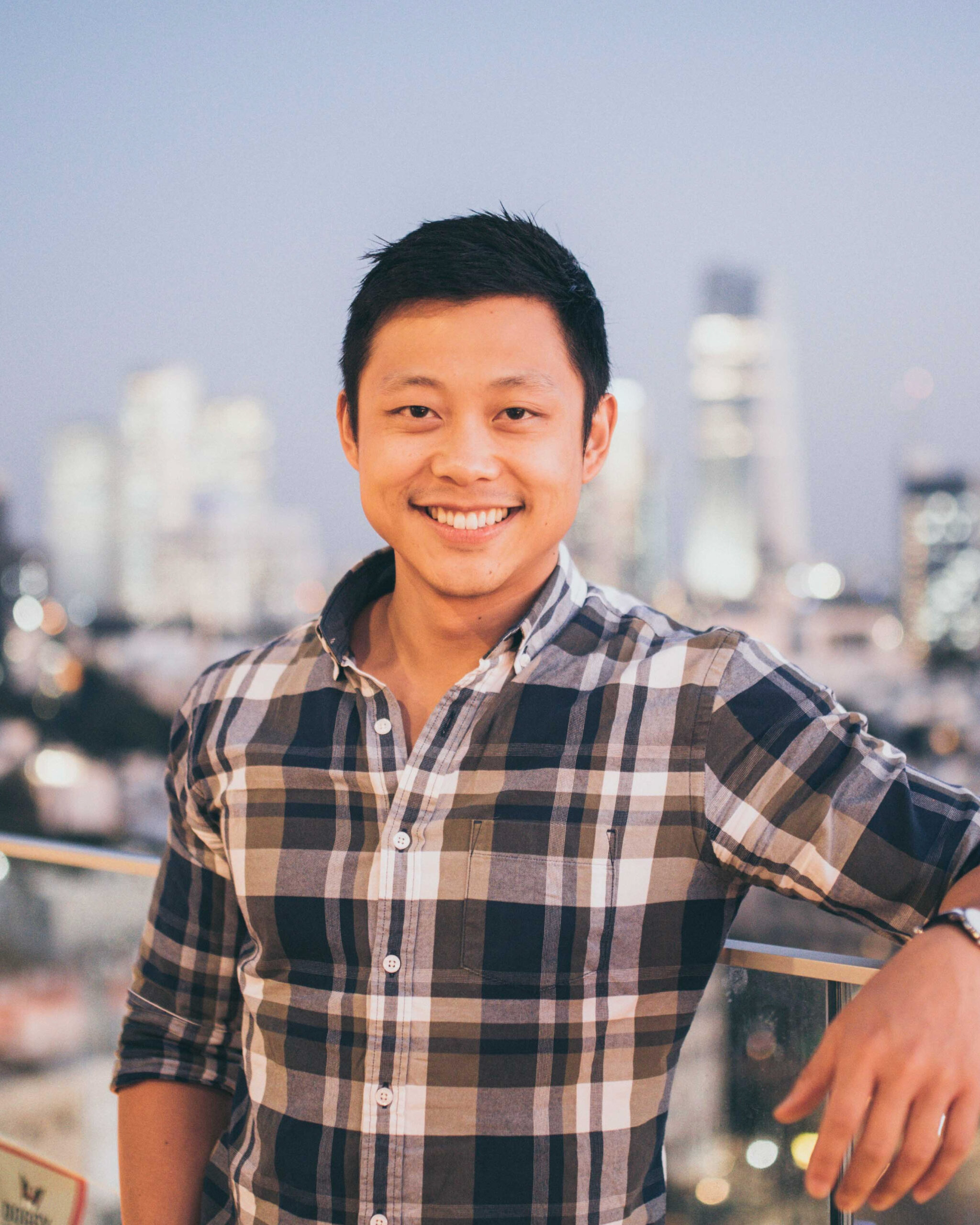
Chris Ha’s work is a visual treat to see, not only because of the passions that’s reflected in his well-composed frames, but also in the effort he puts in breaking tough concepts of post-processing in his videos. Spanning across multiple genres, his work has amassed admirers and acclaim from around the world. Asian Photography caught up with him to talk about his journey, mistakes, key learnings and more. Excerpts:

When did travel photography become more than just a hobby for you?

I’ve always loved photography. Back in my college days, I worked at a photo lab and would spend hours

studying other people’s photos, trying to understand what made them compelling. For years, I actually

focussed more on concert photography — capturing fast-paced moments in low light taught me a lot about timing, composition, and storytelling. I’ve carried a camera with me everywhere, but it wasn’t until my wife and I travelled to Japan in 2023. Travel photography really became something more. I posted a few photos from that trip on social media, and they unexpectedly went viral. That’s when I realised I wanted to take travel photography more seriously and share it as a form of art. It’s such a rewarding feeling when people connect with your work and see the beauty you saw at that moment.

What’s the first thing you learnt doing travel photography?

One of the first lessons I have  learned is that the best moments in travel photography often happen when you least expect them. You have to let the scene come to you – not the other way around. That learning really showed itself during a trip to the Atacama Desert in Chile. We were driving in the early hours of the morning on our way to another location when I spotted something out of the corner of my eye. A

herd of vicuñas were quietly grazing, with the Andes mountains in the background, and the first light of  sunrise casting a golden glow across the scene. It was surreal. I quickly asked the driver to pull over, grabbed my camera, and shot it right out the window. That photo ended up being one of my favourite captures. It was a reminder that sometimes the most powerful images aren’t planned – they happen when you’re fully present and ready to respond.

What are some mistakes you made early on that you wish someone had warned you about?

One big mistake I made early on was thinking I had to capture everything. I’d try to document every angle and every moment, afraid I’d miss something. But in doing that, I wasn’t really slowing down to observe or be intentional with my shots. Over time, I realised that great photography is less about volume and more about vision. It’s about waiting for the right moment, the right light, and the right feeling. 

Another lesson was realising, you don’t need the latest gear to take great photos. I used to shoot on an older Canon 5D Mark III until just last year. It didn’t have all the features of modern mirrorless cameras, but it helped me master the fundamentals. Having limitations pushed me to be more creative and intentional every time I picked up the camera.

How do you handle failure or disappointment?

I’ve definitely had trips where the weather didn’t cooperate, access was restricted, or the photos just didn’t turn out the way I imagined. It’s frustrating at the moment, but I’ve learned to see those situations as part of the process. Not every shoot is going to be a win, and that’s okay. 

I try to treat those moments as a reminder to stay flexible and present. Sometimes the best shots happen

when you stop chasing the original plan and start paying attention to what’s around you instead. And even if I come home without the photo I wanted, I’ve usually gained something else – a new idea, a better understanding of the location, or simply a good story. Those “misses” have helped me grow just as much as the successful shoots.

At what point did you feel confident enough to start sharing your knowledge with others?

It was after my first few travel photos went viral on Instagram. Until that point, I was mostly shooting for myself. There’s always that doubt in the back of your mind—wondering if people will connect with your work the same way you do. But seeing others respond to the photos and ask how I captured certain shots gave me the confidence to start sharing more of my process. That acknowledgement helped me realize that what I’ve learned could actually help others on their own journey. And the more I shared, the more I enjoyed being part of that creative exchange.

Was teaching always part of the plan, or did it happen naturally as you grew in your career?

It was never part of the plan, but I genuinely enjoy it. As I started sharing more of my work, people began

asking questions — about my camera settings, editing, or how I captured a specific moment. I realised I liked helping others figure it out. It’s fun to support someone in their own creative journey and help give them the confidence to share their art. The world just feels richer when more people are showing how they see things in their own unique way.

Has teaching others ever helped you see your own work in a new way?

Absolutely. Teaching forces you to slow down and really think about why you do what you do. When I break down my process for someone else, it makes me more intentional with how I shoot and edit. Sometimes I’ll explain something I do out of habit, and in doing so, I realise there’s actually a more efficient or creative way to approach it.

It’s also inspiring to see how other people interpret the same scene or technique differently. That perspective reminds me to stay curious and keep evolving. Teaching isn’t just about giving knowledge – it’s a two-way exchange that keeps me learning too.

What’s one piece of advice you always give to new photographers, no matter where they’re starting from?

Just start shooting and get your work out there. Don’t wait until everything feels perfect. The best way to grow is by doing, experimenting, and learning as you go. And don’t be afraid to share your work, even if it feels daunting at first.

Putting your photos out into the world, especially on social media, can feel intimidating. You might worry

about what others will think or whether your work is “good enough”. But the truth is, sharing your art is part of the process. It helps you build confidence, get feedback, and find your voice. Everyone starts somewhere, and the only way to improve is to keep showing up.

May 2025

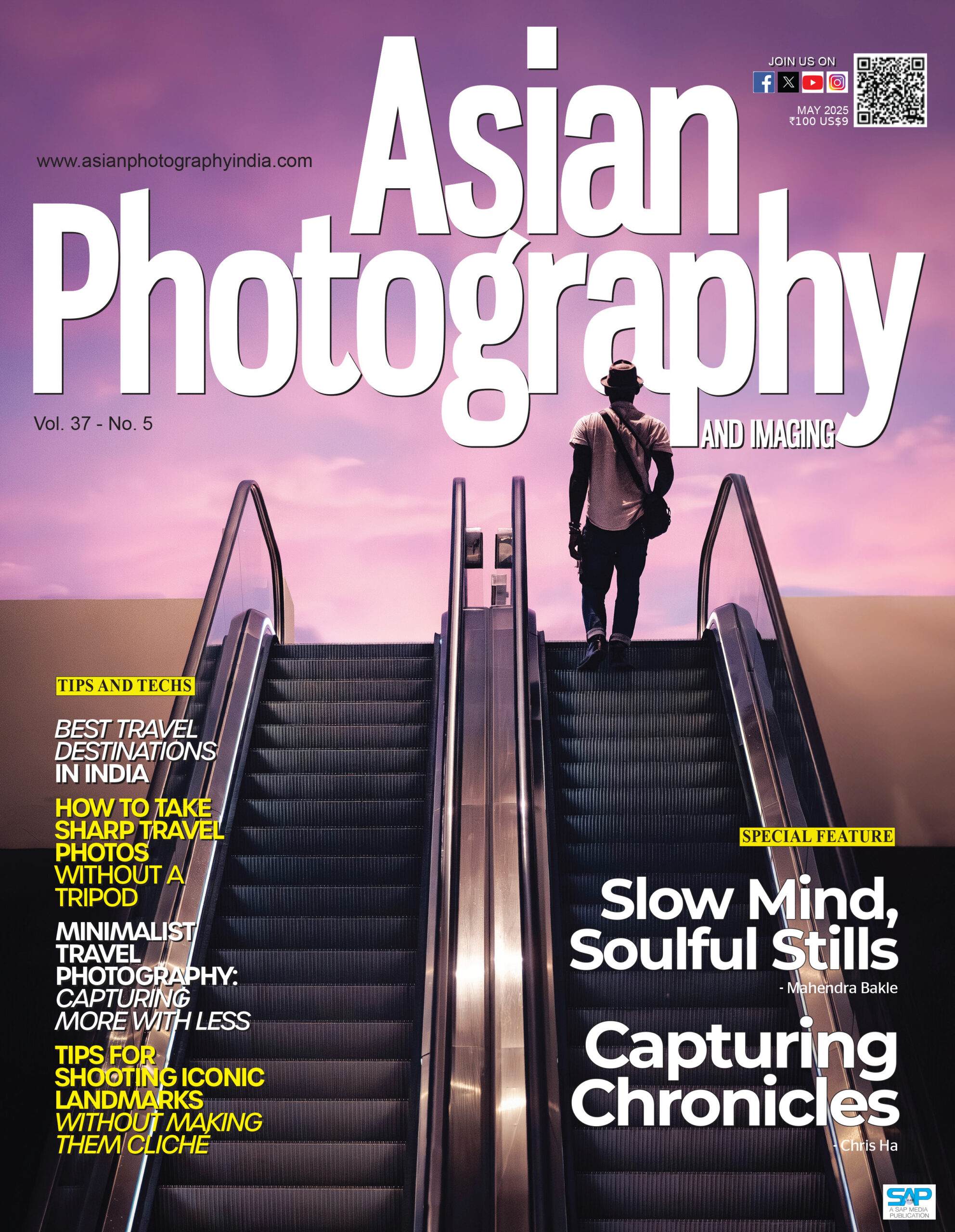
Asian Photography Magazine May 2025 Issue is out!

📸 Cover by: Chris Ha

In this issue, explore:

Capturing Chronicles – Chris Ha
Slow Mind, Soulful Stills – Mahendra Bakle
Best Travel Destinations in India
How to Take Sharp Travel Photos Without a Tripod
Minimalist Travel Photography
Tips for Shooting Landmarks Without Making Them Cliche

April 2025

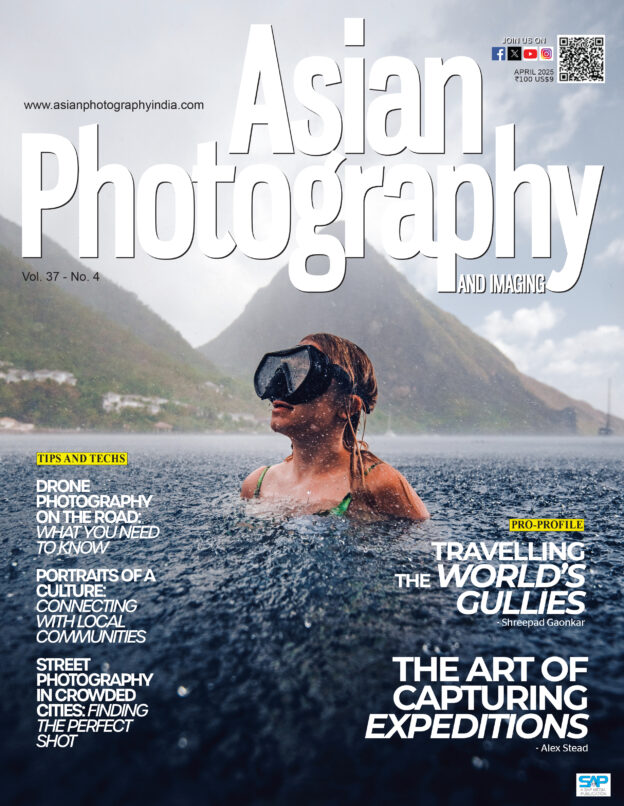
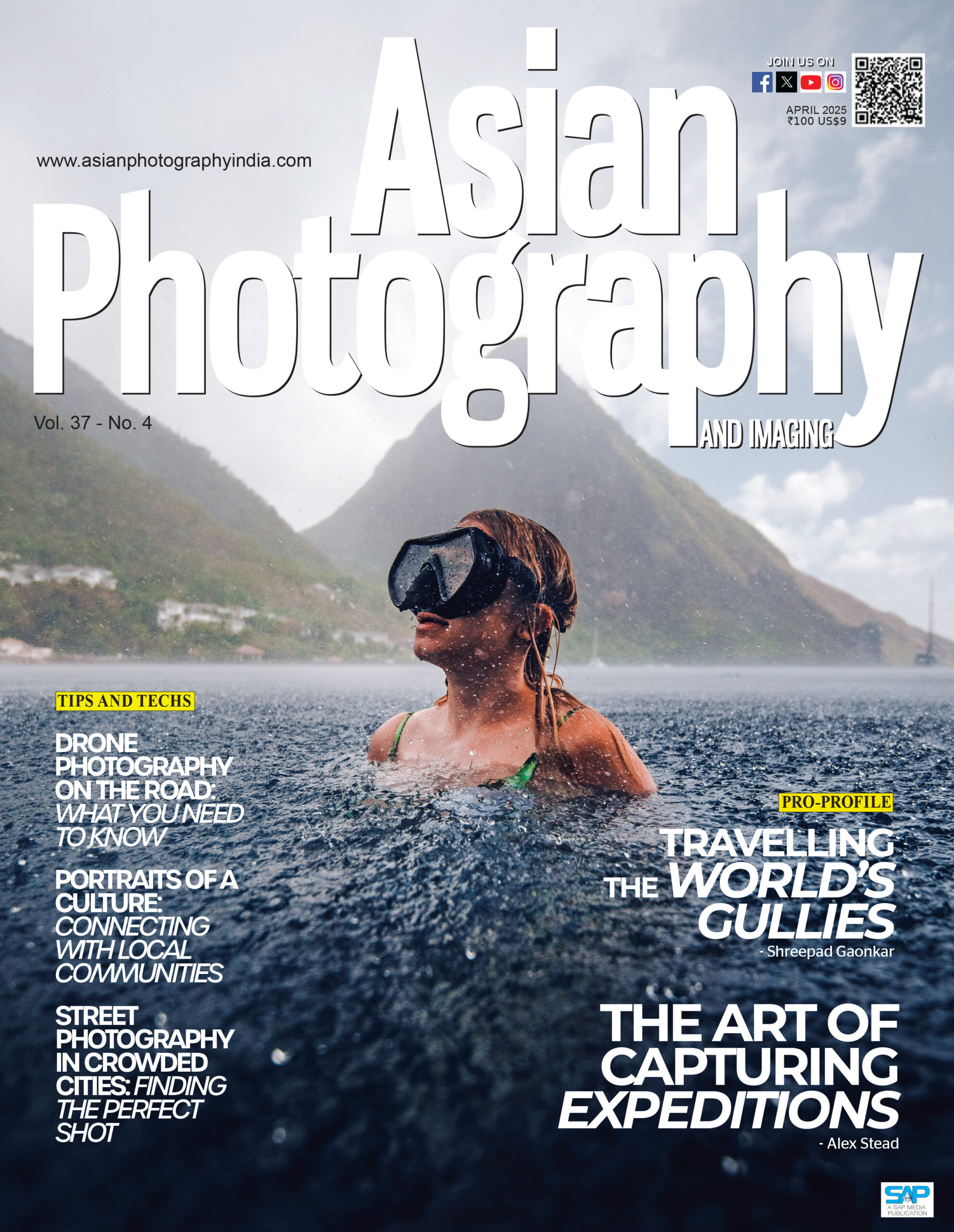
Asian Photography Magazine April 2025 Issue is out!

📸 Cover by: Alex Stead

In this issue, explore:

The Art of Capturing Expeditions – Alex Stead
Travelling The World’s Gullies – Shreepad Gaonkaar
Best Travel Photography Gear For All Budgets
Drone Photography On The Road
Portraits of a Culture
Street Photography in Crowded Place