
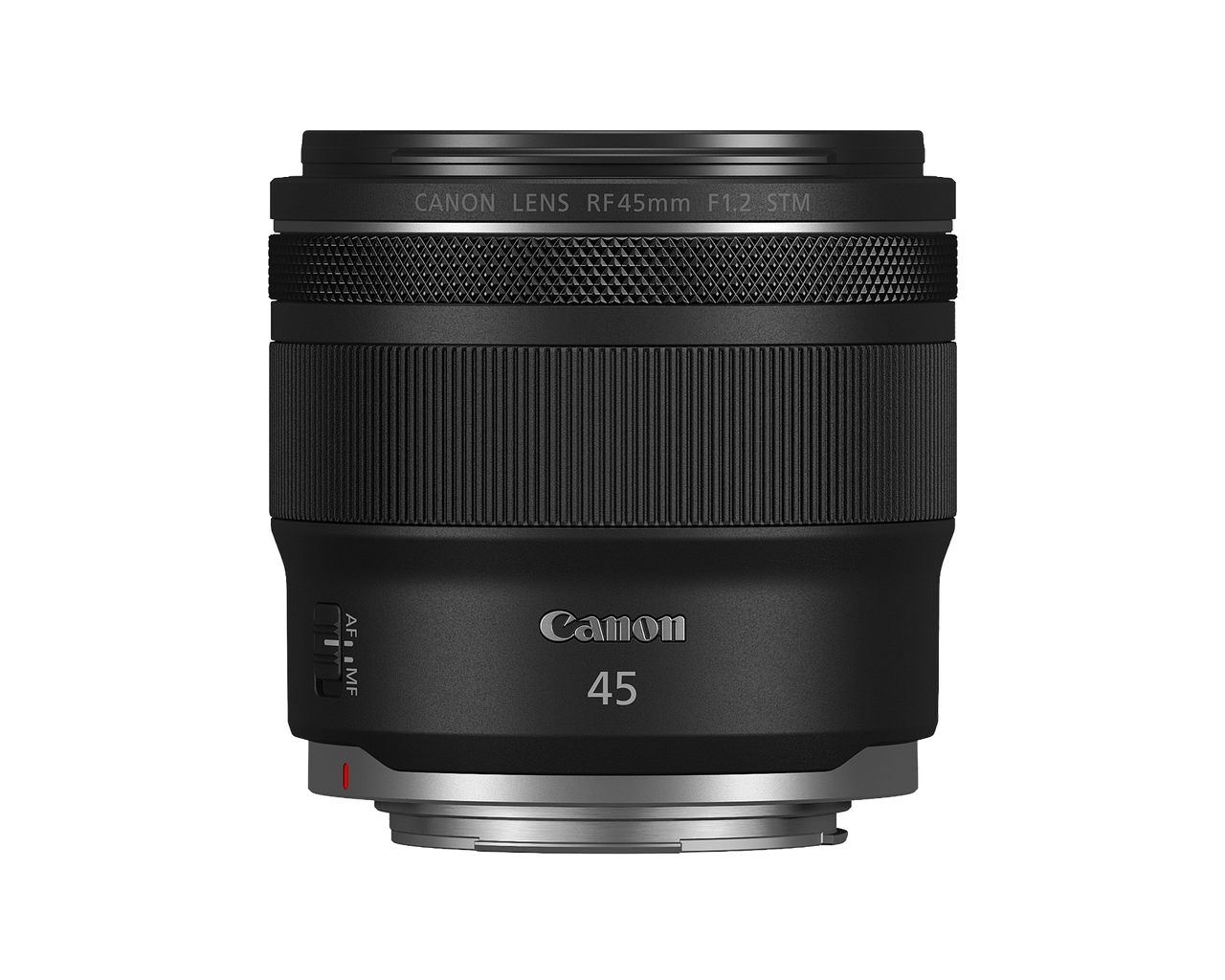
2025 was a year of interesting lenses, and we have one of those to review today. THIS, is Canon’s latest offering—the RF 45mm F/1.2 STM—which doesn’t look or feel or even cost like an F/1.2 prime lens. Coming in at ₹40,495, this is a staggeringly low price point, ESPECIALLY for a F1.2 prime lens with autofocus.
In this article, we’ll be reviewing this lens, exploring the pros and cons of using this lens, and whether we’d recommend this to you.
An Interesting Focal Length
Before heading into the review, let’s quickly discuss why it’s 45mm and not 50. An easy answer would be cost and size, but there’s one more interesting perspective. See we’re told that the field of view of the human eye is equivalent to an image produced by a 50mm lens on a full-frame sensor, but technically, it’s closer to 43mm. So this 45mm lens is closer to your vision’s FOV. Nitpicking done, let’s move ahead with the review.
Look, Body & Feel
Canon has learnt from Nikon last year, where they launched affordable F1.4 lenses with good image quality, and have tried to match up to them with this lens. The 45mm 1.2 is constructed using engineered plastic, with a metal mount, weighing at 364 grams, making it super portable. Paired with a body like R6III, the kit is lightweight and super portable. The lens features nine glass elements in seven groups with only one aspherical lens and a front filter thread upfront of 67mm. Naturally, it doesn’t come with OIS.
But mind you, this lens isn’t weather sealed—which might be the first area where Canon has cut back on to save cost. But there’s also no special coating on the front element, so the lens is prone to smudges and whatnot—we recommend a cleaning kit handy.

There’s no bells & whistles obviously, there is an AF-MF switch, a focus ring and a control ring upfront which moves freely with a very light click. That’s it, super minimal, super easy to use.
Image Quality
This is perhaps the most interesting section of the video you have been waiting for. The images this lens produces are not tack sharp at F/1.2—which is expected. Images aren’t very sharp at the centre, but this sharpness falls apart even more when we go towards the edges. Stopping down the lens to F/1.8 and lower renders sharper detail, but of course, that comes at the cost of depth of field and the quality of bokeh.



Autofocus
This is where we find the second reason why this lens costs so little. The 45 F/1.2 features an STM motor for autofocus, which means it’s marginally slower than USM or VCM motors in other Canon lenses. Another thing to observe is that the lens focuses internally and you can see the mechanism in action—which is another ingress point for dust & debris.

Paired with the EOS R6 Mark III, we could see that the camera could identify and track subjects in a wide-variety of scenarios but the lens couldn’t keep up, leading to a lot of missed shots. The focusing speed is okay for slow-paced/normal scenarios, and we’d recommend not using this lens for any fast-paced scenarios like sports, wildlife or action.
In videos, focus breathing is prominent, and is well-corrected by the R6 III we shot on. But for photographers who’re looking to focus stack using this lens, it might be a dealbreaker.
And there is a slight delay when you engage the focus and when the lens actually focuses. You can actually hear and sort of feel the focus motor engaging when it’s working, but it’s not loud enough to show up in the video you’re shooting.
Bokeh

The bokeh out of this lens is its best characteristic, as you can see. At F/1.2, they’re spherical in the middle with some cat’s eye bokeh in the corners and the bokeh becomes less-round as we stop down the aperture. The texture of the bokeh itself isn’t too bad, no onion rings or any weird artefacts. But you can also see some weirdly shaped bokeh in the corners, which is an interesting touch.
Close Focussing

The minimum focussing distance (MFD) for this lens is not too bad at 45cm, giving it a very low magnification ratio of 0.13x. At minimum focus in wide aperture, the lens produces reasonably sharp images, at least in the centre, which of course becomes better as we narrow down the aperture.
Chromatic Aberration Performance

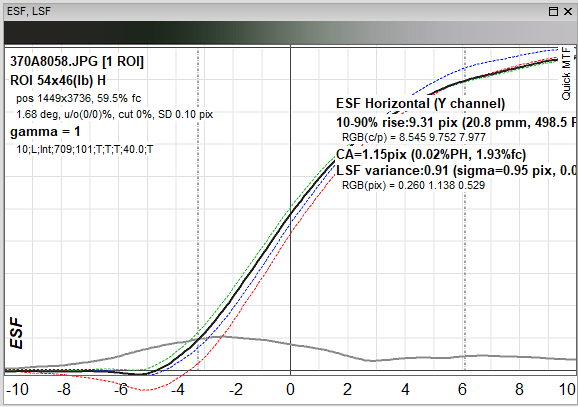
This is perhaps the biggest con with this lens. Testing through quickMTF showed us why this lens costs so little. In the centre, the CA value was 0.79 and as we went to the edges of the frame, it went to 1.15—which is very high. This shows up in the out of focus areas in images, where you can clearly see some visible colour fringing in the out of focus areas, and this extent of chromatic aberration can’t be removed in software either—and it can be distracting from the locus of the image i.e. your subject.
Flaring & Ghosting

For a lens with no special coatings, the flaring is surprisingly controlled and can even be pleasing in some cases. But you have to be careful with the front element as it can collect fingerprints easily. There is no lens hood in the box, but it can be purchased separately if needed.
Is This For You? Verdict
For a lot of photographers, Canon’s “nifty-fifty” 50mm F/1.8 is their first prime lens. If you’re new to the Canon ecosystem and you’re not a professional, you could look into getting this lens as your first F/1.2 lens. The image quality out of this lens might be interesting to some users, who might prefer the look of an older, soft-focussing lens on a newer body with autofocus, but that does come at a price. At ₹40k this looks more like an experimental, fun lens rather than a solid option for shooters looking for a small, light lens with good image quality.
The 50 1.8 is definitely a better option across the board in terms of image quality and autofocus, but what this lens gives you is access to super shallow depth of field and low-light performance and if you can use the softness of this lens as a creative tool, then you can get some very interesting, but beautiful images.
