
Tag Archives: Canon RF lens

Canon RF 45mm F/1.2 Review

2025 was a year of interesting lenses, and we have one of those to review today. THIS, is Canon’s latest offering—the RF 45mm F/1.2 STM—which doesn’t look or feel or even cost like an F/1.2 prime lens. Coming in at ₹40,495, this is a staggeringly low price point, ESPECIALLY for a F1.2 prime lens with autofocus.

In this article, we’ll be reviewing this lens, exploring the pros and cons of using this lens, and whether we’d recommend this to you. 

An Interesting Focal Length

Before heading into the review, let’s quickly discuss why it’s 45mm and not 50. An easy answer would be cost and size, but there’s one more interesting perspective. See we’re told that the field of view of the human eye is equivalent to an image produced by a 50mm lens on a full-frame sensor, but technically, it’s closer to 43mm. So this 45mm lens is closer to your vision’s FOV. Nitpicking done, let’s move ahead with the review.

Look, Body & Feel

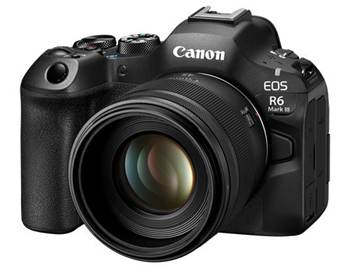
Canon has learnt from Nikon last year, where they launched affordable F1.4 lenses with good image quality, and have tried to match up to them with this lens. The 45mm 1.2 is constructed using engineered plastic, with a metal mount, weighing at 364 grams, making it super portable. Paired with a body like R6III, the kit is lightweight and super portable. The lens features nine glass elements in seven groups with only one aspherical lens and a front filter thread upfront of 67mm. Naturally, it doesn’t come with OIS. 

But mind you, this lens isn’t weather sealed—which might be the first area where Canon has cut back on to save cost. But there’s also no special coating on the front element, so the lens is prone to smudges and whatnot—we recommend a cleaning kit handy. 

There’s no bells & whistles obviously, there is an AF-MF switch, a focus ring and a control ring upfront which moves freely with a very light click. That’s it, super minimal, super easy to use.

Image Quality

This is perhaps the most interesting section of the video you have been waiting for. The images this lens produces are not tack sharp at F/1.2—which is expected. Images aren’t very sharp at the centre, but this sharpness falls apart even more when we go towards the edges. Stopping down the lens to F/1.8 and lower renders sharper detail, but of course, that comes at the cost of depth of field and the quality of bokeh. 

Autofocus

This is where we find the second reason why this lens costs so little. The 45 F/1.2 features an STM motor for autofocus, which means it’s marginally slower than USM or VCM motors in other Canon lenses. Another thing to observe is that the lens focuses internally and you can see the mechanism in action—which is another ingress point for dust & debris.

Paired with the EOS R6 Mark III, we could see that the camera could identify and track subjects in a wide-variety of scenarios but the lens couldn’t keep up, leading to a lot of missed shots. The focusing speed is okay for slow-paced/normal scenarios, and we’d recommend not using this lens for any fast-paced scenarios like sports, wildlife or action.

In videos, focus breathing is prominent, and is well-corrected by the R6 III we shot on. But for photographers who’re looking to focus stack using this lens, it might be a dealbreaker.

And there is a slight delay when you engage the focus and when the lens actually focuses. You can actually hear and sort of feel the focus motor engaging when it’s working, but it’s not loud enough to show up in the video you’re shooting. 

Bokeh

The bokeh out of this lens is its best characteristic, as you can see. At F/1.2, they’re spherical in the middle with some cat’s eye bokeh in the corners and the bokeh becomes less-round as we stop down the aperture. The texture of the bokeh itself isn’t too bad, no onion rings or any weird artefacts. But you can also see some weirdly shaped bokeh in the corners, which is an interesting touch. 

Close Focussing

The minimum focussing distance (MFD) for this lens is not too bad at 45cm, giving it a very low magnification ratio of 0.13x. At minimum focus in wide aperture, the lens produces reasonably sharp images, at least in the centre, which of course becomes better as we narrow down the aperture. 

Chromatic Aberration Performance

This is perhaps the biggest con with this lens. Testing through quickMTF showed us why this lens costs so little. In the centre, the CA value was 0.79 and as we went to the edges of the frame, it went to 1.15—which is very high. This shows up in the out of focus areas in images, where you can clearly see some visible colour fringing in the out of focus areas, and this extent of chromatic aberration can’t be removed in software either—and it can be distracting from the locus of the image i.e. your subject.

Flaring & Ghosting

For a lens with no special coatings, the flaring is surprisingly controlled and can even be pleasing in some cases. But you have to be careful with the front element as it can collect fingerprints easily. There is no lens hood in the box, but it can be purchased separately if needed.

Is This For You? Verdict

For a lot of photographers, Canon’s “nifty-fifty” 50mm F/1.8 is their first prime lens. If you’re new to the Canon ecosystem and you’re not a professional, you could look into getting this lens as your first F/1.2 lens. The image quality out of this lens might be interesting to some users, who might prefer the look of an older, soft-focussing lens on a newer body with autofocus, but that does come at a price. At ₹40k this looks more like an experimental, fun lens rather than a solid option for shooters looking for a small, light lens with good image quality. 

The 50 1.8 is definitely a better option across the board in terms of image quality and autofocus, but what this lens gives you is access to super shallow depth of field and low-light performance and if you can use the softness of this lens as a creative tool, then you can get some very interesting, but beautiful images.

Canon Unveils New RF Ultra-Wide L-Series Fisheye Zoom and 14mm f/1.4 Prime

14mm F/1.4 L VCM

Canon has announced two new ultra-wide-angle L-series RF mount lenses for its EOS R system, expanding options for professional photographers and filmmakers working at extreme wide perspectives.

The RF7-14mm f/2.8-3.5L Fisheye STM is Canon’s first native RF mount fisheye zoom lens and the world’s first lens to offer a circular 190° angle of view. With a wider 7mm focal length on full-frame cameras, it captures more of the scene than the EF8-15mm f/4L Fisheye USM, enabling distinctive circular and diagonal fisheye effects. The lens features an f/2.8–3.5 aperture for improved low-light performance, an updated optical design for better aberration control, and weighs approximately 476g, making it lighter than its EF predecessor. It also supports 2D 180° VR image creation using Canon’s EOS VR Utility software and uses equidistant projection for more uniform image compression.

7-14mm F/2.8-3.5 L

Alongside it, Canon introduced the RF14mm f/1.4L VCM, its widest and fastest non-fisheye RF prime lens to date. Weighing around 578g, it is lighter than the EF14mm f/2.8L II USM while offering a brighter f/1.4 aperture. Designed as a photo-video hybrid, it features a VCM motor, iris ring, reduced focus breathing, and specialized optical elements to minimize coma flare and colour fringing. A rear filter holder supports sheet-type filters.

Both lenses feature L-series dust and drip-resistant construction and advanced coatings to reduce flare and ghosting. The RF14mm f/1.4L VCM is priced at ₹2,19,995, while the RF7-14mm f/2.8-3.5L Fisheye STM costs ₹1,52,995.

Canon Launches R6 Mark III & RF 45mm F1.2 Lens

Canon has announced the latest addition to its EOS R mirrorless lineup – the EOS R6 Mark III and RF45mm F1.2 STM lens — aimed at professional photographers & filmmakers seeking high performance and versatility.

Succeeding the R6 Mark II launched two years ago, the Mark III features a new 32.5-megapixel full-frame sensor that offers improved autofocus, and enhanced shooting speeds of up to 40 fps (electronic) and 12 fps (mechanical). The camera also introduces a pre-continuous shooting mode, capturing up to 20 frames before the shutter is fully pressed, along with advanced subject tracking via the Register People Priority function inherited from the flagship EOS R1.

On the video front, the R6 Mark III supports 7K 60p internal RAW recording, 3:2 Open Gate video, Canon Log 2/3, and HDR PQ, catering to professional workflows. It also offers proxy recording, waveform and false colour displays, and 14 in-camera colour filters for quick creative output.

Accompanying the camera is the new RF45mm F1.2 STM, Canon’s most affordable f/1.2 lens to date. Compact and lightweight at just 346g, it provides stunning bokeh and sharpness, serving as a versatile option for both full-frame and APS-C shooters (72mm equivalent).

The EOS R6 Mark III body is priced at ₹2,43,995, while kits range up to ₹3,43,995. The RF45mm F1.2 STM lens is priced at ₹40,495 (all prices inclusive of taxes).
Canon India Announces RF 20mm F/1.4 L VCM

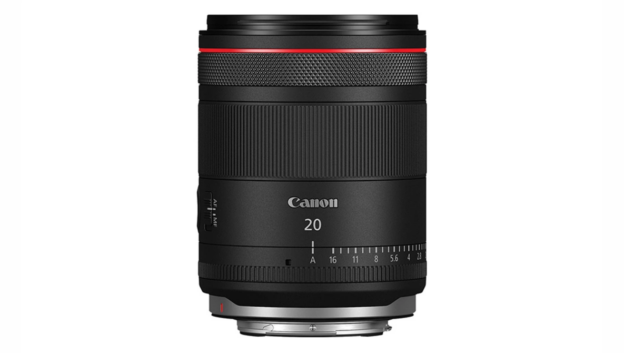
Canon has also expanded its RF Hybrid Primes line up with the RF 20 mm f/1.4 L VCM lens. Joining the 24 mm, 35 mm, and 50 mm f/1.4 lenses, this ultra-wide-angle lens offers smooth autofocus, minimal focus breathing, and a physical iris ring for video shooters. Weighing 519g, it has a 67 mm filter thread, a rear filter holder, and is dust-resistant. 

Designed for both stills and video, the lens features built-in focus breathing reduction for stable compositions, smooth subject tracking, and silent operation. Its high-thrust VCM ensures precise, rapid autofocus, while a clickless iris ring allows seamless aperture adjustments during filming. The lens shares consistent size, weight, and controls with Canon’s other f/1.4L VCM primes, reducing the need for rebalancing when swapping lenses.

Optically, the RF 20mm F1.4L VCM introduces BR optics to minimize chromatic aberration, along with aspherical elements that correct distortions like sagittal coma flare—perfect for astrophotography. ASC and SWC coatings reduce flare and ghosting, ensuring crisp, high-resolution images even in challenging lighting. With its outstanding image quality and future-proof design for 8K imaging, this lens is a must-have for professionals seeking both precision and versatility.

The Canon RF 20mm F/1.4 L VCM is priced at ₹1,58,995.

Canon India launches EOS R50V Camera with RF-S 14-30mm F4-6.3 IS STM PZ Lens

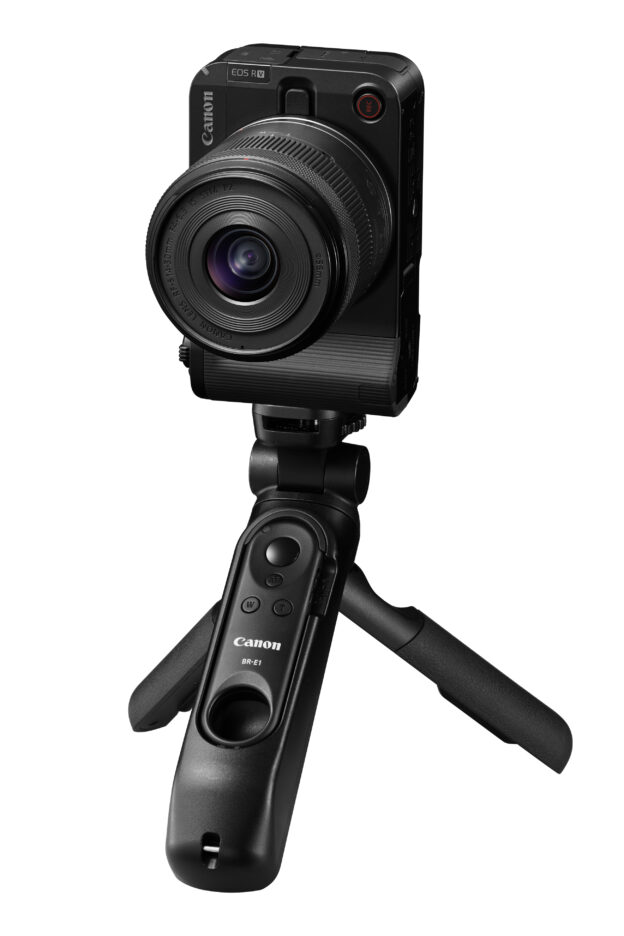
Canon has unveiled the EOS R50 V and RF-S 14-30mm F4-6.3 IS STM PZ, designed for next-gen content creators. The EOS R50 V, a video-centric camera without a viewfinder, featuring a design optimized for vertical shooting, enhanced ergonomics, and a dedicated button layout for seamless video creation. It supports Canon Log 3, oversampled 4K 30p, cropped 4K 60p, and Full HD 120p recording.

With features like Cinema View, Slow & Fast Motion mode, and professional tools like false colors and zebras, creators can achieve cinematic results. Dual Pixel CMOS AF II, Register People Priority, and Movie Digital IS enhance autofocus and stabilization. The camera also supports XF-HEVC S / XF-AVC S formats, Custom Pictures, LUTs, and 3-mic noise reduction for professional workflows.

For livestreaming, the EOS R50 V offers multiple connection methods, including USB-C and HDMI, with cropped 4K 60p streaming. The Smooth Skin Movie mode and Movie for Close-Up Demos AF further refine content.

The RF-S 14-30mm F4-6.3 IS STM PZ is Canon’s first RF lens with built-in power zoom, offering smooth servo zooming via the lens, camera controls, or a smartphone app. Its lightweight design maintains balance on gimbals, while 5-axis image stabilization ensures steady shots. The lens’ 22.4-48mm equivalent focal length makes it versatile for wide and close-up shooting, with a 0.15m close focus and 0.38x magnification for detailed content creation.

Canon EOS R50V + RF-S 14-30mm kit is priced at ₹79,995 and the RF-S 14-30mm lens is priced at ₹33,995