Tag Archives: photography

Sigma 17-40mm F/1.8 Art Lens Review

Watch our video review here

One of the main reasons people invest in a full-frame camera is for the benefit of full-frame lenses. And as many photographers know, APS-C lenses don’t always measure up. But Sigma is aiming to change that with its new 17-40mm F1.8. Since the claim is bold, we had to test it ourselves.
This is the Sigma 17-40mm F1.8 DC Art, priced at ₹78,000. This lens follows the legacy of Sigma’s iconic 18-35mm F1.8,
launched nearly a decade ago. In this review, we’ll walk you through its performance and whether it’s worth the upgrade.

APS-C on a Full Frame

For this review, we tested the lens on a Sony A7 IV in crop mode (1.5x). You might wonder why—but this also makes sense for newer APS-C bodies like Sony A6600 or Fujifilm XT-5. The lens is available in multiple mounts including Sony E, Fujifilm X, Canon RF and Lumix L.

Look, Build & Feel

As expected from Sigma’s Art series, the build quality is excellent. The lens feels solid in the hand, weighing 535 grams, and is built primarily from metal. Key features include:

  • Aperture ring with a click/de-click option
  • Aperture auto-lock switch
  • Two programmable buttons (top and side)
  • AF/MF switch
  • 67mm filter thread
  • Locking lens hood (standard for Sigma)

It also comes with a metal mount, weather sealing, and “Made in Japan” proudly etched on it. The zoom is internal, meaning the balance doesn’t shift while changing focal lengths—perfect if you’re planning to use it on a gimbal. Minimum focus distance is 28cm, giving you a bit of macro flexibility.

Image Quality

Shot on A7 IV

As mentioned earlier we tested this on the Sony A74 body in crop mode with a 1.5x. But we also have featured some images with the A6400 APSC camera – so watch the credits pic info carefully. The 17-40mm on APSC translates to approximately 26 to 60 mm in full frame equivalence which makes this lens versatile and it comes very close to the 24-70mm full frame lens. The F/1.8 aperture on APSC gives you a full frame equivalent depth of field of F/2.8.

The pics in daylight are very vibrant, well saturated and speaks for the quality of the lens. The sharpness and detailing are also good, although occasionally in depth it does add some softness to the sides. What was surprising was that this lens was able to provide great depth – similar to a full frame camera and I think that is its good quality.

Autofocus

While on this subject – lets speak about the autofocus as well. I was impressed by its performance. In our testing the auto focus was very quick both in the low and high focal range. Even with subjects in the foreground the lens focuses fast and delivers sharp results – so that was good to see. The motors are also silent, which adds to the shooting experience and can be important if you want to shoot without getting noticed. In video as well the focusing was smooth and breathing is very minimal, which scores this lens another point in the video category.

Lowlight

Shot on A7 IV

As good as the daylight performance was – the lowlight performance was also impressive. Some images were shot with the Sony A6400 – and for most part the images were pretty good. The sharpness and detailing were evident and even in dimly lit conditions the images were decent. Yes occasional detailing while zooming in was missing and some colour shifting was noticed, although colour shifting is more for a sensor.

Macro/Close-up

Shot on A7 IV

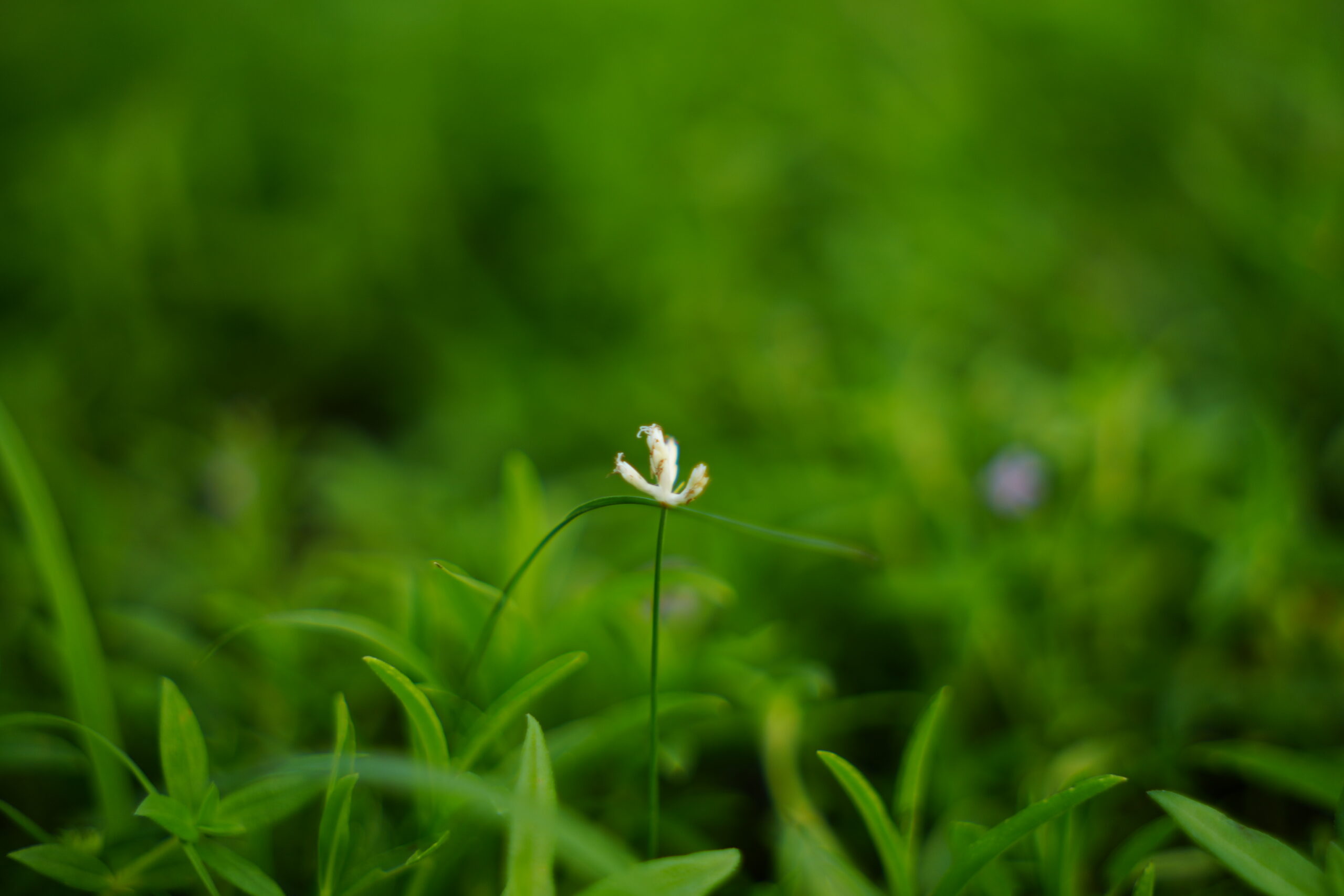
This lens has a minimum focus distance of 28cm, so this allows you to shoot pseudo macro images and the images are decent. The images in this case are ok. I wouldn’t say it’s a big bonus, but in case if you want to use it then you at-least have an option to shoot with.

Bokeh

Shot on A7 IV

Being an F/1.8 lens, at full frame it is equivalent at F/2.8 depth of field. The bokeh is nice to look at, it’s a mix of round and cat’s eyes depending on how light is falling on the subject. I felt the bokeh was better in the lowlight than in daylight in our testing time. But overall a decent performance in this regard.

CA Value

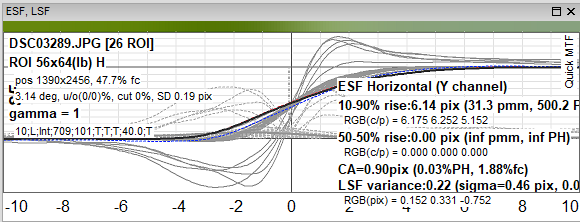
We ran it through Quick MTF and got a score of 0.90. That it fairly high – but in real world application, it is difficult to get that.

Flare and Ghosting

Shot on A7 IV

The flaring and ghosting performance of the lens was very impressive. Even in extreme lowlight and at a wide aperture, the lens displayed minimal flaring and ghosting. Yes occasionally there was a slight hint. But nothing of concern.

Conclusion

So what do we think about the Sigma 17-40mm F/1.8 Art lens? The predecessor to this lens was launched nearly a decade back. And it was time that Sigma offered a new replacement. And in most parts I think it delivers well. The focal length is now closer to a full frame 24-70 F/2.8 standard zoom lens. Yes, it is not all great – for instance the CA performance could be better and the lowlight has some room for improvement as well.
But what Sigma is able to deliver is a good daylight performance that it closer to a full frame 24-70 lens. And that I think for any APS-C shooter, this is a vital and worthy upgrade from a kit lens.
Priced at around ₹78,000 this definitely will feel like a full frame lens on your wallet as well. However, if you are looking forward to shooting professional level content on your APSC camera without upgrading to full frame bodies then this, we would say, is an easy choice.

Shooting Ganpati Festival From Aagman to Visarjan

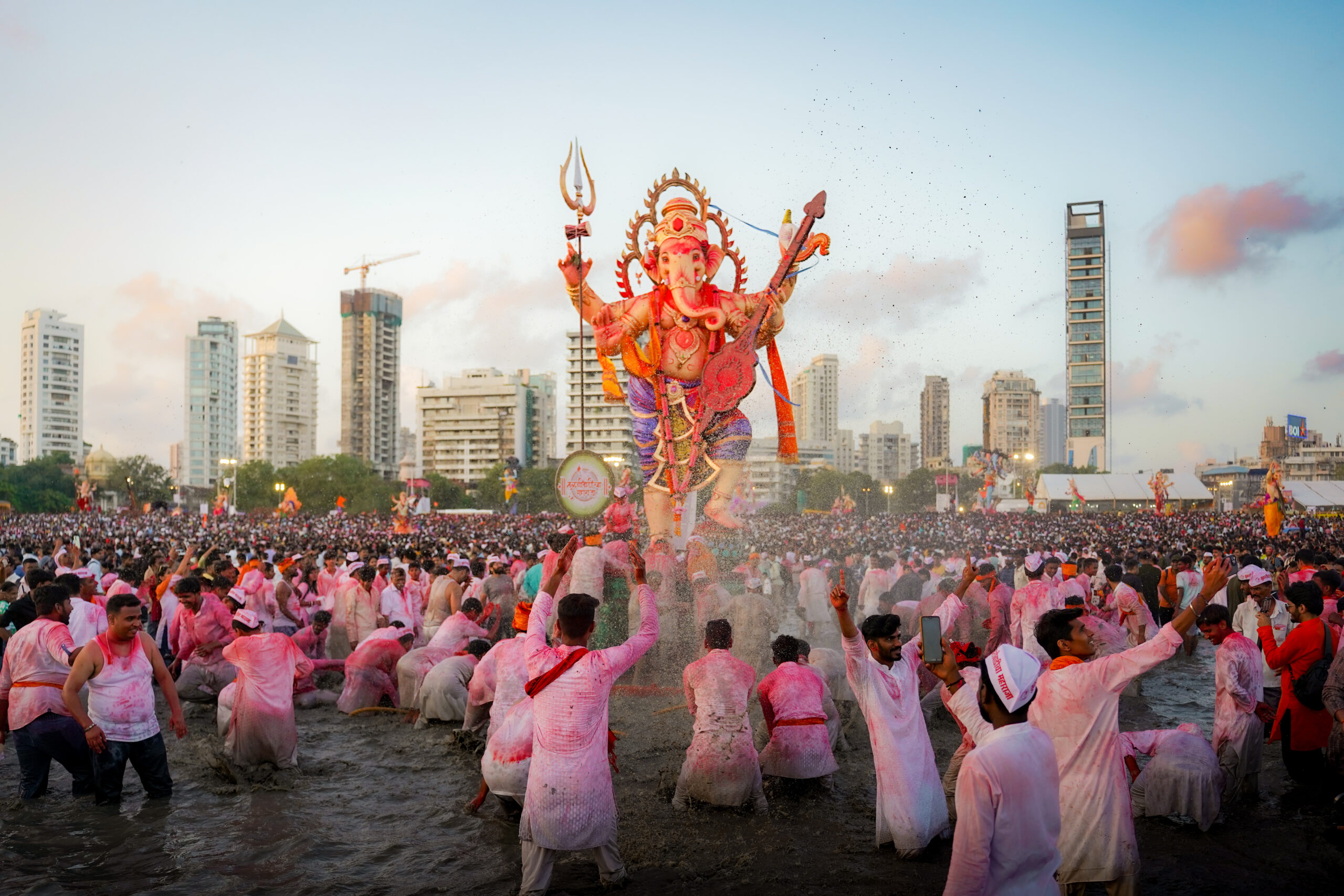
The Ganpati festival is one of the most vibrant celebrations in India. Spanning ten days, it marks the arrival of Lord Ganesha into homes and communities, followed by processions and the final immersion in water. For photographers, the festival offers an unmatched opportunity to capture emotions, rituals, and culture in its purest form. Shooting Ganpati from the very beginning, known as Aagman or arrival, until the emotional conclusion at Visarjan is not just about clicking pictures. It is about telling the story of devotion, colour, and community spirit that unfolds before your eyes.

Preparing for the Festival

Before you lift the camera, preparation is key. The Ganpati festival is crowded, chaotic, and filled with movement. Plan your gear carefully. A wide-angle lens works wonders for capturing the scale of processions and pandals. A 35mm or 50mm prime lens is excellent for portraits of devotees, while a telephoto zoom (70-200 for example) helps isolate details when you cannot move close, and add compression to the scene. Carry extra memory cards and batteries, because opportunities appear at every turn.

It is equally important to understand the rituals. Speak with locals or organisers in advance. Knowing when the idol arrives, when Aarti takes place, and how the immersion will unfold helps you anticipate moments instead of reacting to them. Being aware of cultural sensitivities ensures you do not interrupt prayers or block devotees during key ceremonies.

Capturing Aagman – The Arrival

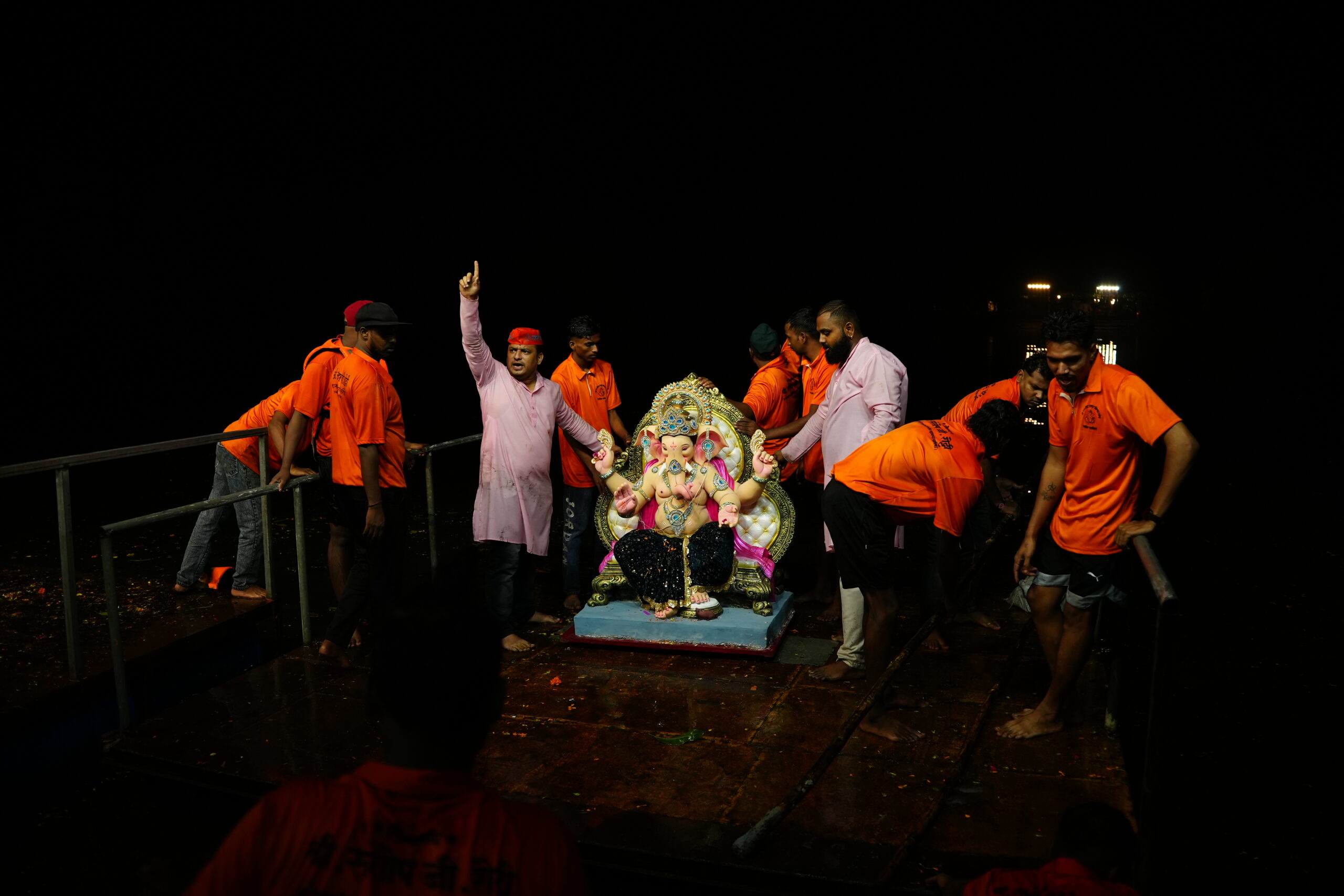
Photo by Ramnarayan Iyer @iyergee

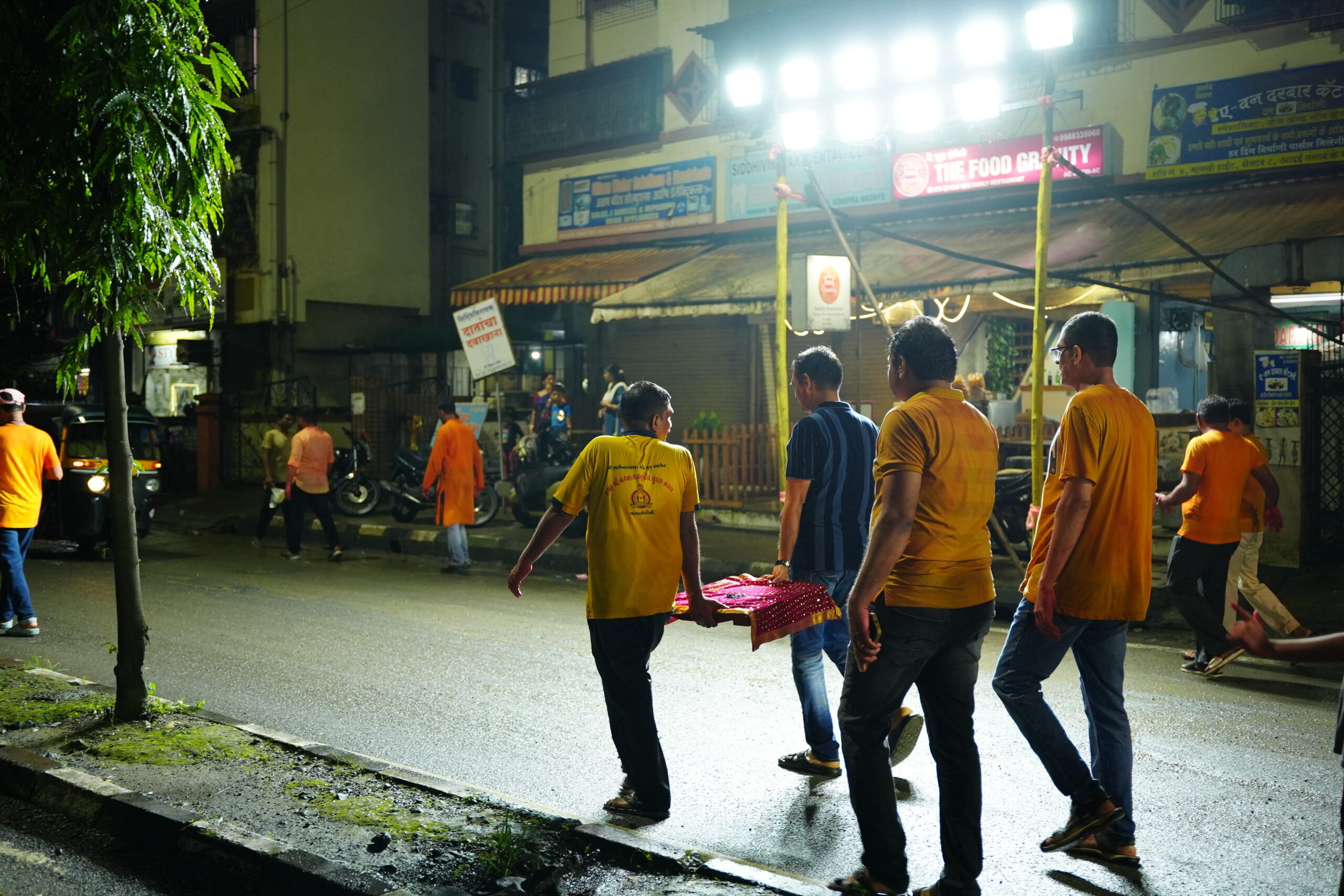
The festival begins with the Aagman procession, when the idol of Lord Ganesha is brought to homes or pandals. This is one of the most photogenic stages, filled with drumming, chanting, and dancing. Focus on the faces of the people carrying the idol. Their expressions reveal pride, responsibility, and devotion. Wide shots of the crowd create context, but do not miss the chance to step in closer for intimate details like a child showering flowers or an elder offering prayers.

Natural light during Aagman can be tricky because the processions often take place in the evening or at night. A fast lens with a wide aperture helps in low light. High ISO performance of modern cameras allows you to preserve the atmosphere without using a flash, which can distract or feel intrusive. If you must use artificial light, diffuse it to maintain softness.

The Pandal Experience

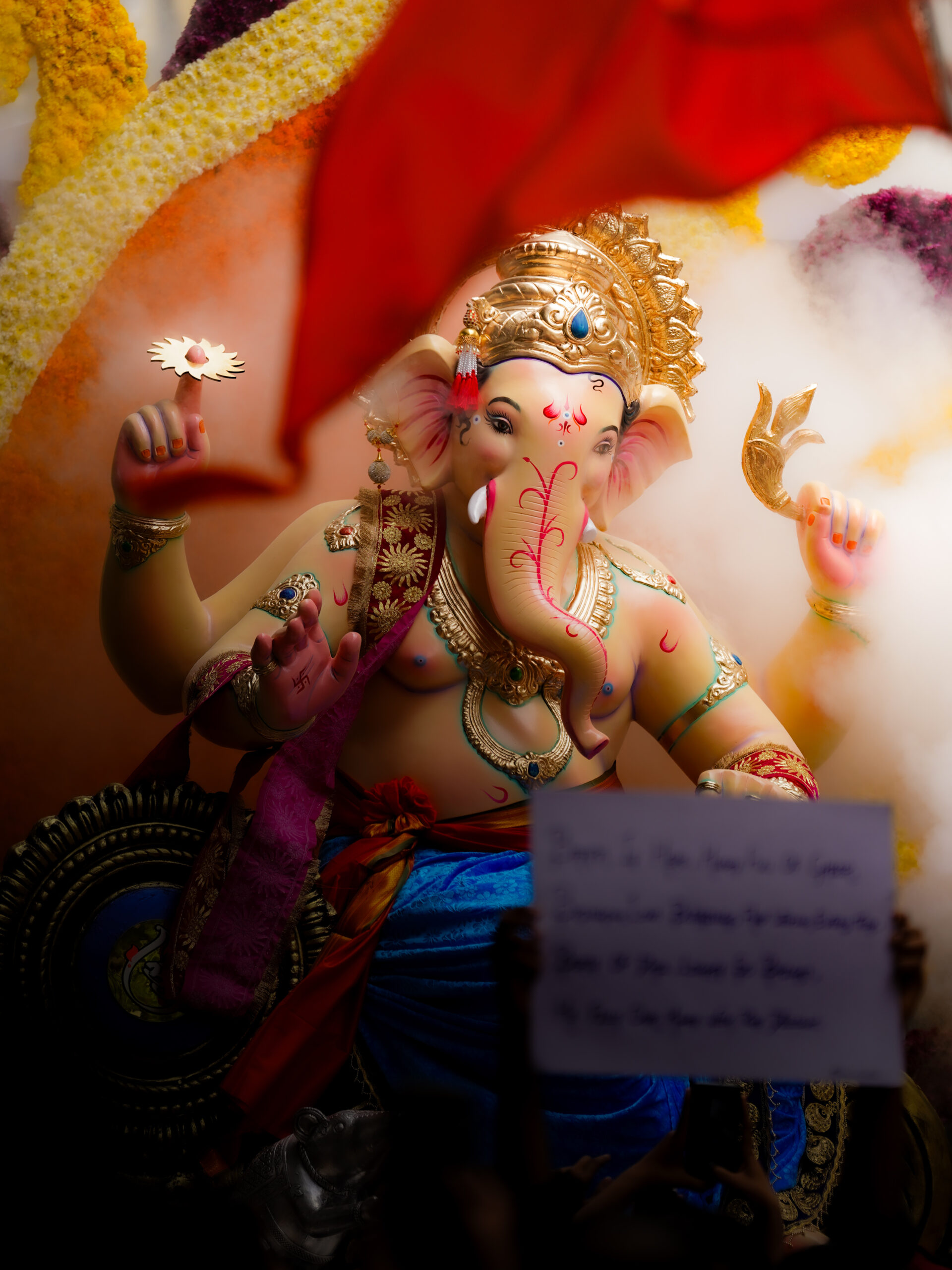
Once the idol is installed, the pandal becomes the heart of celebration. This is where photographers can spend hours observing and documenting rituals. Every pandal is unique in its decoration, and shooting wide frames highlights the craftsmanship of artisans who build elaborate backdrops. Step closer to capture offerings like Modaks, coconuts, and garlands that symbolise devotion.

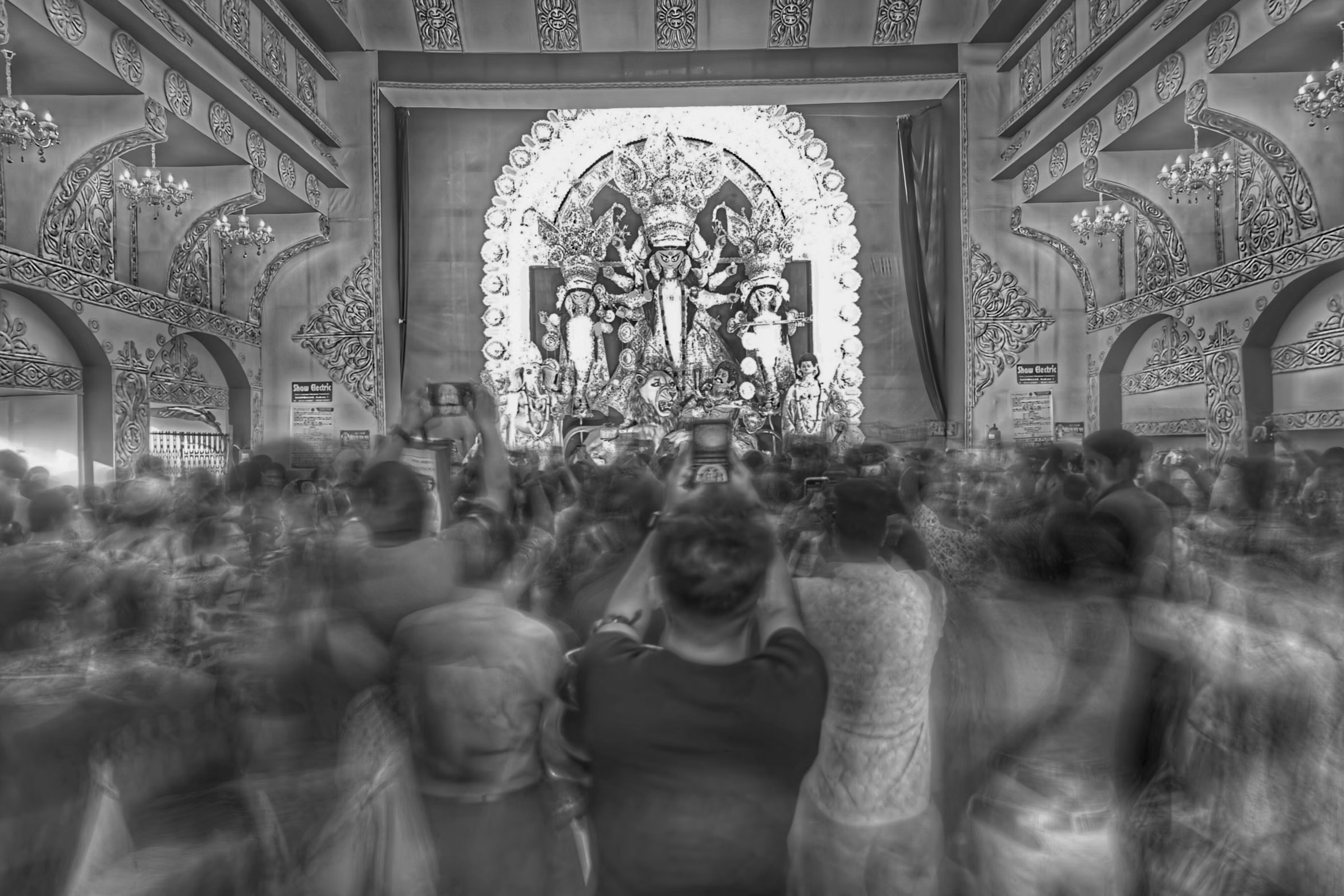
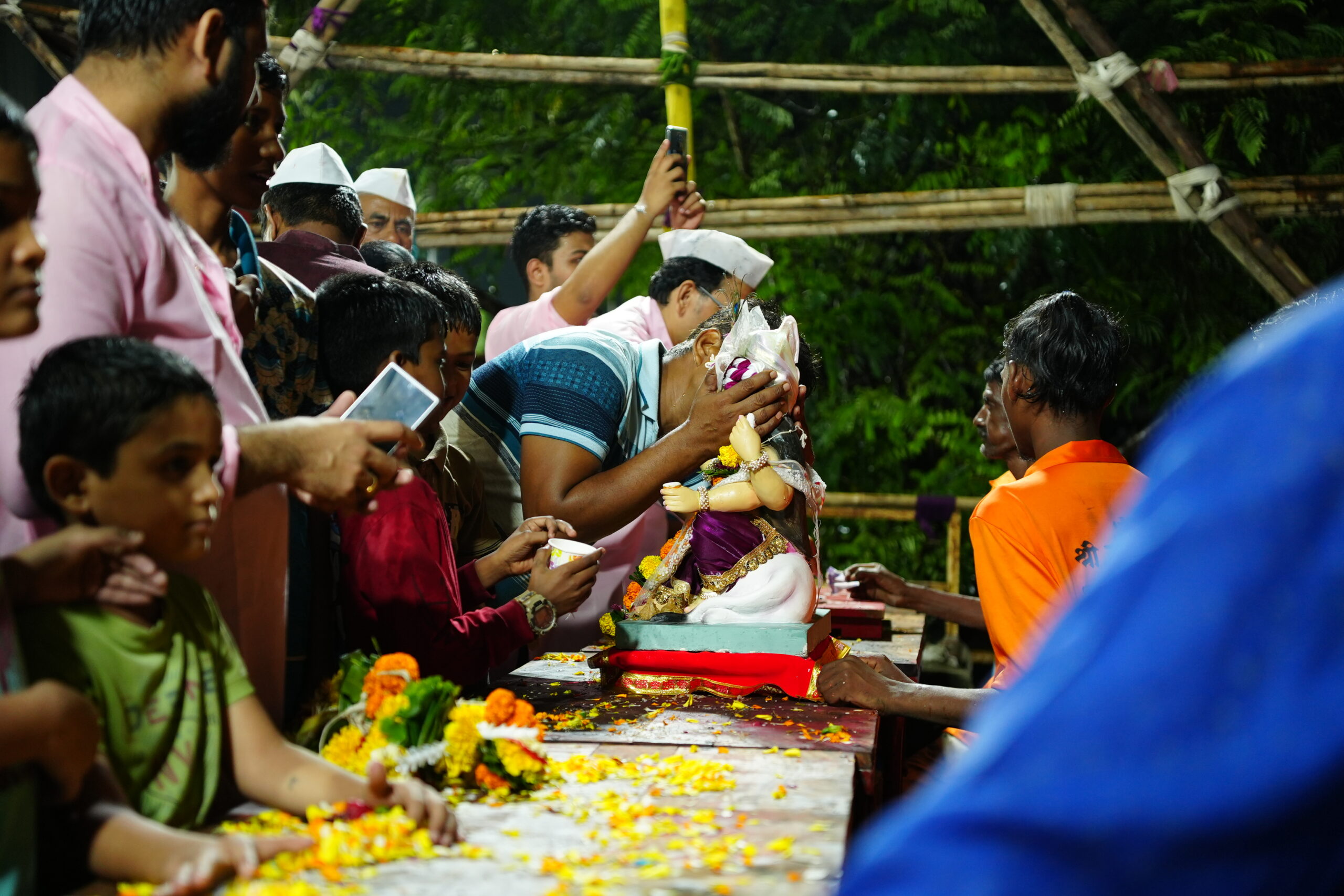
Portraits here take on deeper meaning. Families gather together, women dress in traditional sarees, and children look in awe at the deity. When shooting portraits, be respectful and seek permission. A simple smile and nod can go a long way. Consider working in black and white for certain frames to emphasise emotion over colour, especially during quiet moments of prayer.

Crowds inside pandals can be overwhelming. Look for elevated positions or corners where you can shoot without blocking the flow of people. Patience is key. Sometimes waiting in one spot allows you to capture a natural alignment of devotees, priests, and the idol in a single frame.

Rituals and Aarti

Daily rituals such as Aarti are powerful moments filled with energy. Flames of oil lamps, rhythmic chants, and clapping hands create an environment that challenges your technical skills. The firelight is warm and flickering, so expose carefully to retain highlights. Focus on the lamp or the expressions of devotees holding it. Including multiple layers in your frame, such as the priest, the idol, and the crowd, helps narrate the collective participation.

Sound is integral to the Ganpati festival, and while photography cannot capture it, your images can imply it. Photograph drummers mid-beat, cymbals clashing, and singers with mouths wide open. Movement blur can be used creatively to convey rhythm. A slightly slower shutter speed while panning can turn drummers into dynamic streaks of colour and motion.

Street Scenes Around Ganpati

Beyond pandals, the streets themselves tell stories. Vendors sell flowers, sweets, and souvenirs. Artisans paint idols in small workshops. Children play with toy drums and balloons. These candid moments add context to your coverage. Use a documentary approach, blending into the crowd and waiting for authentic interactions.

Street photography during Ganpati requires awareness of light and shadow. Narrow lanes may create high contrast conditions. Expose for the highlights, but allow some areas of shadow to retain depth. Reflections in water or glass can also provide creative frames.

The Journey of Visarjan

The emotional peak of the festival comes with Visarjan, the immersion of the idol. Processions are louder, grander, and filled with contrasting emotions of joy and sorrow. Wide shots of massive crowds carrying idols create a sense of scale, while close-ups of teary-eyed devotees reveal intimacy.

At Visarjan, movement is constant. Processions may last hours, with dancing, chanting, and music filling the streets. A wide-angle lens helps capture the energy of groups dancing together. To avoid chaotic frames, look for repeating patterns such as raised hands, synchronised drummers, or colourful powders in the air.

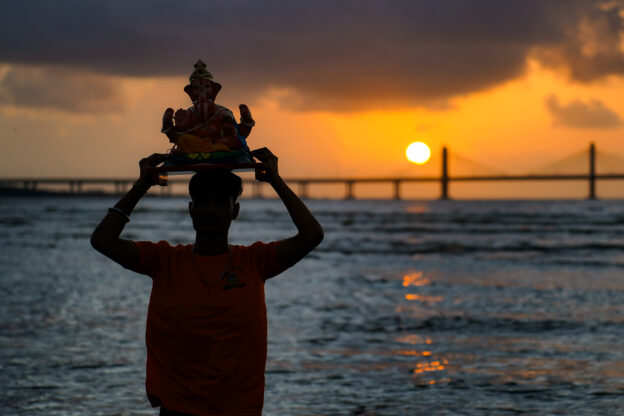
When the idol finally reaches the water, the atmosphere shifts. The loudness gives way to moments of silence as devotees bid farewell. This is when you can switch to a quieter, more reflective style of photography. Silhouettes of the idol against the water or the horizon are powerful images. Children watching from their parents’ shoulders or elders folding hands in prayer capture the emotion of parting.

Be cautious around water during Visarjan. Keep gear protected with waterproof covers and carry minimal equipment. The energy and crowd density can be overwhelming, so safety must always come first.

Storytelling Through Sequencing

Once the festival concludes, the task of storytelling begins. Review your images not as single frames, but as a sequence. Start with the anticipation of Aagman, move through rituals and community interactions, and end with the bittersweet farewell of Visarjan. Including wide shots, medium shots, and close-ups ensures variety. Look for a balance of celebratory and emotional moments, because the Ganpati festival is as much about joy as it is about devotion.

Editing plays a vital role. Do not oversaturate colours, because authenticity matters. Sometimes muted tones highlight raw emotions better. For a cohesive series, maintain consistency in your colour grading or black and white conversions.

Respect and Responsibility

Photographing Ganpati is a privilege. Remember that for devotees this is not just an event, but a deeply spiritual experience. Respect boundaries, avoid obstructing rituals, and never treat people as mere subjects. Offering a copy of your photo to families or organisers is a simple gesture of gratitude.

Also be mindful of the environment. Immersions place stress on rivers and seas, and many communities now embrace eco-friendly idols. Documenting these efforts can help raise awareness about sustainability. As a photographer, you carry the power not only to record culture, but also to influence positive change.

Conclusion

From the joyous arrival of Aagman to the emotional farewell of Visarjan, the Ganpati festival is a complete journey. For photographers, it offers lessons in anticipation, patience, and respect. Every frame has the potential to tell a story, whether it is the sparkle in a child’s eyes or the grandeur of thousands walking together. Shooting Ganpati is not just about capturing images. It is about experiencing a festival where devotion and celebration meet, and translating that experience into photographs that will resonate long after the drums fall silent.

Instagram’s iPad App Is Finally Here!

Instagram has officially launched a dedicated app for iPad, responding to long-standing user demand. The new version introduces features tailored for the larger screen, including a fresh layout designed to improve browsing and multitasking.

When opening the app, users land directly in Reels, bringing short-form video to the forefront on a bigger display. A new “Following” tab makes it easier to track updates from favourite accounts, while enhanced layouts allow smoother access to messages and notifications. Reels also play in full size while users expand the comments section, ensuring uninterrupted viewing alongside real-time reactions.

The iPad app is available now on the App Store, aiming to provide a more complete Instagram experience for creators and casual users alike.

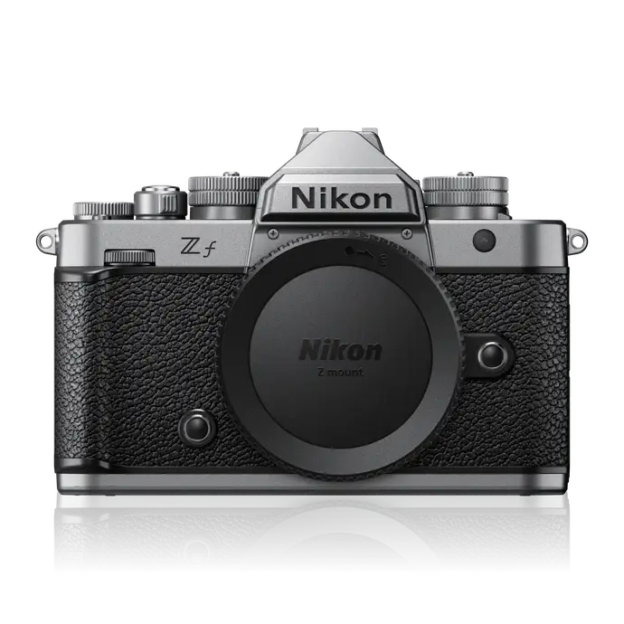
Nikon Launches Z f in Silver

Nikon India has announced a silver version of its full-frame camera, the Nikon Z f. The new model features a finish reminiscent of classic film-era cameras.

In addition to the silver body, six new Premium Exterior colour options including Indigo Blue, Red, Green, Orange, Grey, and Brown are available. Owners can request a change of body covering through the MyNikon App, after which the camera can be sent to a Nikon service centre for customization.

The Z f will also gain a Film Grain feature via a planned firmware update in 2025. This function will allow users to add grain to photos and videos, with adjustable grain size and strength, offering a film-like appearance. Combined with Picture Controls and Imaging Recipes, it expands the camera’s creative options.

The Nikon Z f Silver is priced at ₹1,76,995, same as the original Z f in black.

Displaying image.png

Hahnemühle Debuts Hemp Gloss Baryta with Prints for Wildlife’s 2025 Edition Hope

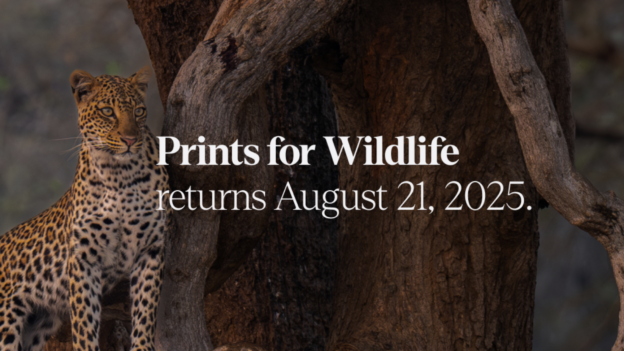
Hahnemühle continues its partnership with Prints for Wildlife, the global conservation initiative that has raised over $2.1 million USD since 2020. The 2025 campaign, titled “Edition Hope”, will exclusively debut Hemp Gloss Baryta, Hahnemühle’s new sustainable fine art paper.

2025 Edition Hope ©Prints for Wildlife

Building on the success of previous editions printed on Hahnemühle Hemp, Edition Hope features contributions from 240+ photographers worldwide, offering limited-edition wildlife and nature prints for one month only. All proceeds (after printing and handling) go directly to nonprofits protecting wildlife and habitats, with new partners including Conservation International.

Hemp Gloss Baryta combines eco-friendly hemp fibres with a refined glossy baryta surface, delivering deep blacks, rich contrasts, and vibrant colours while minimising environmental impact. Before its official launch in October 2025, the paper will be showcased exclusively through this campaign, produced by Hahnemühle Certified Studio ThePrintSpace in the USA, UK, and Germany.

Launching August 21, 2025, Edition Hope presents powerful imagery ranging from landscapes to intimate wildlife portraits and will conclude on September 9th. Collectors can purchase prints at www.printsforwildlife.org, supporting both art and critical conservation efforts worldwide.

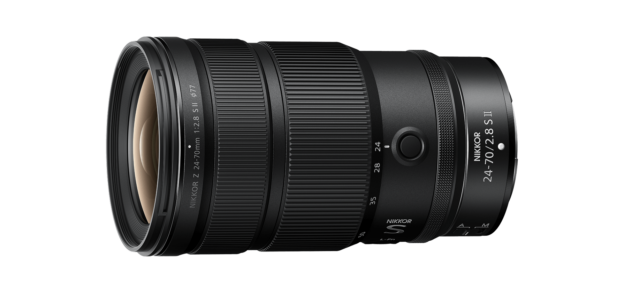
Nikon Announces Z 24-70mm f/2.8 S II

Nikon has introduced the NIKKOR Z 24-70mm f/2.8 S II, a new-generation standard zoom lens for full-frame/FX-format mirrorless cameras. The lens features an internal zoom mechanism, improving balance during operation and reducing the risk of dust and debris entering while zooming. It also offers enhanced resistance to dust and drips, making it suitable for outdoor use.

The lens is the first zoom model to adopt Nikon’s Silky Swift VCM (SSVCM) autofocus drive, achieving autofocus speeds approximately five times faster than its predecessor, the NIKKOR Z 24-70mm f/2.8 S. Autofocus tracking during zooming has also been improved by around 60%, enabling better performance when photographing fast-moving subjects.

Weighing about 675 g, the lens is among the lightest in its class and supports a 77 mm filter thread. It has a minimum focusing distance of 0.24 m at the wide end and 0.33 m at the telephoto end, with maximum reproduction ratios of 0.21× and 0.32× respectively.

Additional features include an 11-blade diaphragm for rounded bokeh, suppression of focus breathing for video, a filter adjustment window on the lens hood, and coatings designed to minimise reflections, ghosting, and flare. The lens also offers a control ring with an optional tactile “click” function.

The NIKKOR Z 24-70mm f/2.8 S II will be available starting August 22, 2025.

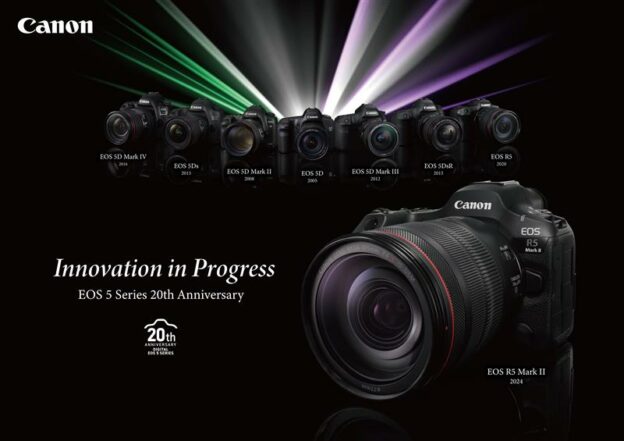
Canon Celebrates 20th Anniversary of EOS 5 Series

Canon is marking the 20th anniversary of its EOS 5 interchangeable-lens digital camera series. Launched in 2005 with the EOS 5D, the 5 series has played a key role in making full-frame photography more accessible. In 2008, the EOS 5D Mark II brought full-HD video capability to DSLRs, sparking widespread use of video in still cameras.

Subsequent models like the EOS 5D Mark III (2012), EOS 5Ds/5Ds R (2015), and EOS 5D Mark IV (2016) focused on advancements in autofocus, resolution, and performance. In 2020, Canon introduced the EOS R5, the first mirrorless camera in the series with 8K video capability. Its successor, the EOS R5 Mark II (2024), has added AI-driven subject tracking and an advanced image processing system.

With eight models released over two decades, the EOS 5 series has been central to Canon’s imaging evolution and many photographer’s workflows. Canon says it will continue to innovate and support the creative community through ongoing development of the EOS 5 line.

Arachnid Aesthetics – Christian Brockes

Christian Brockes’ fascination with arthropods started out as a chance encounter with one in his bathroom. Since then, he has documented many more species over the years, earning acclaim, partnerships, and an ambassadorship, for being a leading voice in macro photography as well as his creative expertise. Asian Photography had a conversation with him about techniques, patience, and purpose behind their highly stylised documentation of insect life. Excerpts:

Do you remember the first macro image you ever shot? What was it?

I started out doing portraits and business photos and had a 90mm macro lens, which I only used for its portrait capabilities. After finding a tiny jumping spider in my bathroom, I decided to use the macro lens for what it was originally intended for and was instantly fascinated by the interesting detail I was able to see in the photo – details which were hidden from the naked eye.

It sparked my interest and started my journey into the tiny world – always looking for new colours, forms, and textures.


What’s something people often misunderstand about macro photography?

To me, macro photography is like a window into that tiny world beneath our feet, which is generally and often overlooked. It is also a very powerful tool for conservation and to create attention to the world’s fascinating biodiversity.

However, macro photography is often featured less prominently in comparison to wildlife photography of bigger animals. People simply seem not to be aware of the wonderful things that are there to discover in and share from the tiny world.

Many people understand macro as only being photography at 1:1 magnification and above, but forget that also at these high magnifications there are stories to tell. Storytelling and composition can elevate macro photography even further.


Do you approach your photography more as documentation, art, or exploration?

Nowadays, I would like my macro photography to be seen as a mixture of stylised documentation. While I always emphasise on composition and also try to create a direct connection between the subject and the viewer, the thing I look for the most is the story: this can be a distinct behaviour of an insect, a hunting scene, mating, or any other interaction.

It is my wish to share my findings to create awareness and interest through these fascinating forms, colours, and features of the insects and spiders I photograph – hopefully leading to respect, which ultimately helps with conservation.


How do you balance patience and spontaneity when working with unpredictable subjects?

The trick is indeed to actually balance both: patience often rewards us with wonderful opportunities and scenes – but these happen spontaneously, so it is very important to be alert, have your setup ready and be able to control your camera blindly, when the moment comes.

I have one routine, where I stay at a promising spot for about an hour. Sometimes it is only 1 or 2 square metres. I adapted my photographic technique to align with this behaviour: I always use a flash and a diffuser, which gives me a highly mobile and compact setup and enables tack-sharp shots even during movements.


How do you see the future of macro evolving—AI, computational focus, mobile macro?

I think mobile macro is the way to go, but not necessarily with mobile phones. Smaller, real cameras, capable of reaching high magnifications while providing decent depth-of-field, would open up the field to many more people.

The Pink flower crab spider Thomisus onustus is a truly fascinating spider as it can change its color, trying to match the flowers it sits on and where it waits for prey. It can change from a plain white form to a plain yellow form and to its most spectacular pink form with stripes, which can be seen here.

The latest generation of mobile phone flagships have remarkable macro features. I use mine from time to time and the results are better than what I captured with my first camera and macro lens.

AI is far from being able to create realistic insect and spider macros – you can spot the AI-generated images easily if you’re a biologist or a naturalist.

Computational in-camera features are a big time saver. My current camera, the OM-1 Mark II, has tons of those: ND filter, graded ND filter, High-Res Shot, modes for light painting, photographing stars, and many more.

My favourites are the focus bracketing and focus stacking modes, which allow me to create a focus bracket I later combine into one image with enhanced depth-of-field. It also speeds up my process.


What are you currently experimenting with or trying to learn next?

Right now, I am pretty satisfied with both my gear and technique when it comes to macro photography of insects and spiders at high magnifications.

I’ve recently favoured single shots over focus stacks more often, as it is all about getting that one specific moment. It also saves time during post-processing.

The next thing I am currently experimenting with is filming macro at high magnifications. Creating macro movies with the same quality as my photos is challenging, as the lighting approach is very different.


Is there a specific image that you want to be remembered by?

I have two personal favourites, which are also my best known photos from publications. One is an Acorn weevil (Curculio glandium) just about to take off and spreads its wings, and the other is a zig-zag sawfly larva that has eaten its distinct zig-zag pattern into an elm leaf.

I specialise on jumping spiders, and my two favourite species, both extremely colourful – one, Habronattus americanus, is from North America and one, Stenaelurillus lesserti, can be found in southern India – would be my personal holy grail and the ultimate macro portrait.

OnePlus Nord 5 Camera Review – Best Nord Yet?

Last year, when we reviewed the OnePlus Nord 4, it left us wanting more. This year, the Nord 5 arrives with bold promises – it’s the first Nord to feature a Snapdragon 8-series chipset and the first mainstream OnePlus device with a 144Hz OLED display. But what we’re really here for is the camera – especially since it borrows tech from the flagship OnePlus 13. This is priced at ₹31,999 but will be available starting from ₹29,999 with bank discounts. According to OnePlus, this is their most complete Nord yet. So, do the cameras live up to that claim? Let’s find out.

Design & Build

OnePlus continues to push the envelope with its design and build. Ever since the OnePlus 13, they’ve embraced a flat design that feels premium in the hand. The Nord 5 comes in three colour variants with a sleek glass back – thankfully, it’s less slippery than the OnePlus 13. At just 8.1mm thick, it’s comfortable to hold and carry. It also gets an IP65 rating for water resistance this time. A welcome addition is the new Action Button on the left, which can be customised to perform various tasks – including launching the camera and capturing photos. It adds a tactile dimension to the shooting experience, taking a cue from the iPhone. The camera layout is minimal – an exclamation mark-style design with a raised module. You also get signature metallic camera rings, just like the flagship models.

Camera Setup & Specs

Here’s a quick look at the camera hardware:

  • Dual rear cameras
  • 50MP main camera with Sony LYT-700 sensor (14.2MP output)
  • 8MP ultrawide (9MP output)
  • 50MP front camera with Samsung JN5 sensor (14.2MP output)
  • Snapdragon 8s Gen 3 processor
  • 144Hz OLED display with 1800 nits peak brightness
  • 6800mAh battery—the biggest in its segment (for now)

Daylight Main

50 MP main camera with Sony LYT 700 sensor, 14.2 MP images. The camera gives you 3 focal ranges to shoot at 24mm, 28mm and 35mm and the output is at 14.2 MP and overall the pics it shoots are pretty good. The images are vibrant, saturated and pleasing to the eye. In fact, for my liking they are over-saturated since I prefer the more original and natural look. But as I’ve said before – users tend to like these things and I don’t expect people to complain. The sharpness also on zooming in is decent, pleasantly surprising actually. Yes there is some processing that you can see – but in most cases the image sharpness was decent. The shadows, highlights and HDR performance is also surprisingly good. But under backlit scenarios the sharpness and focusing takes a beating. And as compared to the Nord 4 in daylight – this is a massive improvement.

Daylight Wide

8 MP ultrawide camera, 9MP images. The wide camera is a 8 MP camera and like we’ve seen before they output the images at 9 MP. With a 8 MP camera I dont expect the sensor to do much and at best the images from this one are ok. The images show high contrast with highlights and shadows coming under. It still shows good colour tonality as compared to the main camera, which means it is maintaining consistency. The sharpness surely takes a beating and can be better on zooming in, but you can’t expect much with this. There is also distortion seen in the images as well.Overall the performance is decent.

Daylight Telephoto

Just like last time, there is no dedicated telephoto camera and lens in this phone. The main camera is used to shoot tele photos and they are processed in the background. There is optical zoom until 2x and then it switches to digital zoom – all the way up to 20x. In terms of performance I was pleasantly surprised. The images are actually sharp and usable up to 5x and even on zooming in you can see the clarity (at least most of it). There is also very minimal colour shifting as well and it is able to maintain the consistency. But once you move 10x and above then you can see some colour fringing, which is more apparent at the max focal range. But honestly a regular consumer wouldn’t notice any of these things and I am impressed with this performance.

Lowlight Images

In the low light category the images overall are better than I expected. With the main camera the images look well saturated, sharp and pleasing to the eye. The colour reproduction is also good. Yes the images surely seem processed and once you zoom in you can see that. But even under those conditions – they are able to maintain good sharpness.In the wide – much like the daylight the camera does struggle slightly – the shadows and highlights performance takes a beating and the sharpness is also ok. You also see a lot of lens flaring as well in the wide camera, which wasn’t evident in the main camera. There is also a display of colour shifting in the images with some of them displaying a reddish tinge. So I wouldn’t really use the wide camera in low light unless it is absolutely necessary. But like the day – the telephoto again shines with a decent performance in lowlight as well. The images are well saturated and look good. Yes you can easily spot the over processing in most cases, but to the naked eye, they are good. The sharpness is also decent until 5x, and at max zoom range the images aren’t usable honestly.

Portraits

The Nord 5 allows you to shoot portraits at 1x and 2x lenses, and three focal lengths – 24, 35 and 48mm. With such a good camera performance thus far – I was looking forward to the portraits. And I don’t know how to put this – but the images are good, but not impressive enough for me. In daylight the images display good consistency and look natural and pleasing to the eye. We put the phone in a difficult scenario with mostly the light coming in from the back. And the image sharpness in this case was a hit and a miss. The depth performance was good and so was the edge detection – but when you look at the images you don’t feel like they are sharp. There is some haziness looming around them.In low light the sharpness looks lack luster in some cases with some sort of haziness in the images. However the edge detection is pretty good. The depth performance is also impressive with the bokeh looking round and cats eye. There is a slight tinge of yellow and red in some cases, but not something to complain about. At times when it focuses then the images are sharp, otherwise they aren’t. Overall I think there is room for improvement in this.

Front Camera

The front camera allows you to shoot with three lenses and focal lengths, 0.8x or 21mm, 1x or 25mm and 2x or 49mm. Powered by the 50MP Samsung JN5 sensor, images from all 3 lenses are 14.2MP.The output of the front camera is pretty good. It displays sharp details and also delivers good accuracy which is closer to the original scene. So I am impressed with this one.

Front Camera Video

This camera is a massive upgrade where it could only shoot 1080p. On the Nord 5, you can shoot 4K up to 60fps on the front camera.

Video Performance

On the rear camera, you can shoot up to 4k up to 60fps, but only at 1x and 2x. At 0.6x, the view drops down to 1080p 30fps. This is very similar to last year’s. Video quality wise, the output is natural looking, a little bit more saturated and vibrant that what you see with your eyes, and has good dynamic range with no visible signs of over-processing, which is a plus. The OIS gives you super stable footage. In low light, the Nord 5 has good detail in the shadow, and because of the image stabilization, it looks better overall but there is a little bit of flaring. But the image quality overall is a noticeable improvement as compared to the previous phone.

Battery & Display

This might be the first phone we’re seeing and reviewing with a battery pack exceeding 6500mAh. And it is just great. It also supports 80W fast charging and even after using it a lot there is still a lot left over for you to last. For an average user I think it will last more than a day and half easily. So great work OnePlus on this one.

Now this display is just amazing. I think in this price segment – ive never seen anything like it. This is the first ever 144Hz panel on a mobile phone, and it supports HDR. The usage experience is buttery smooth and the visuals are poppy and vibrant, something you’d expect from an OLED display. And it feels that Oneplus has taken this one right out of the flagship book because this actually looks and feels amazing.

Conclusion

So, is this the most complete Nord ever? Honestly—yes. I’m pleasantly surprised. Mid-range phones usually leave me with mixed feelings, but this one delivers on most fronts. Photos are vibrant and detailed, video performance is solid, and the front camera is a standout. Portraits could be better, but with that stunning display, excellent battery, and price tag of ₹30K, OnePlus might just have a winner on its hands. And to the team that worked on this camera setup – bravo. Please send them to work on the next flagship coz according to me – they’ve earned it.

July 2025

Asian Photography Magazine July 2025 Issue is out!

📸 Cover by: Kristine Zula

In this issue, explore:

~ Arachnid Aesthetics – Christian Brockes
~ Capturing Floral Fascination – Kristine Zula
~ Miniature Marvels – Sandip Guha
~ Decay Diaries: Discovering the Beauty of Rot, Rust, and Ruin Through Macro
~ Where Does Macro End and Micro Begin?

Small Scale, Big Stories

Subscribe to the magazine here!, get 12 months free!

Every year around this time, we turn our focus to the world of Macro – a realm that might seem unremarkable from a distance but, upon closer inspection, reveals a breathtaking tapestry of detail and wonder. These tiny marvels hold the power to mesmerize, but they also bring their share of challenges. For those unfamiliar, venturing into macro photography can feel daunting. 

With this issue, we aim to demystify that perception through insightful articles, expert perspectives and practical tips to help make the world of macro more accessible.

In our Pro Profile section, we speak with Christian Brockes, who explores the techniques, patience, and passion behind documenting insect life. Kristine from macro.viewpoint shares how macro photography has shaped her creative journey and deepened her connection with nature and mindfulness. Closer to home, Sandip Guha offers a lens into his precision-driven process, the hardships faced, mistakes made, and the pursuit of that elusive ‘bucket shot.’ Each photographer brings a unique voice to this issue, sure to both inspire and encourage you to explore macro for yourself.

In our Tips section, we explore key themes – like the boundary between macro and micro. Where does one end and the other begin? It’s not just a technical question, but a philosophical one, prompting us to see beauty not only in the grand but also in the minute.

We also discuss macro ethics – a crucial conversation, especially relevant to today’s world. Ethical storytelling and photography extend beyond journalism. In macro, it raises questions about our environmental impact, the treatment of living subjects, and our collective responsibility to nature.

One of the more experimental themes we’ve explored is bioluminescence – a striking metaphor for beauty emerging from darkness. In the deepest waters, light exists not in abundance, but in resilience. It’s a reminder that wonder can lie hidden in the shadows – waiting to be noticed.

We’ve skipped a dedicated feature on macro gear this time, since it was covered in depth last year. However, we’ll make that content available on our website for easy reference. And don’t forget – our E-version is now completely free, making it easier than ever to dive into this edition.
Until next time…
Happy Reading!